

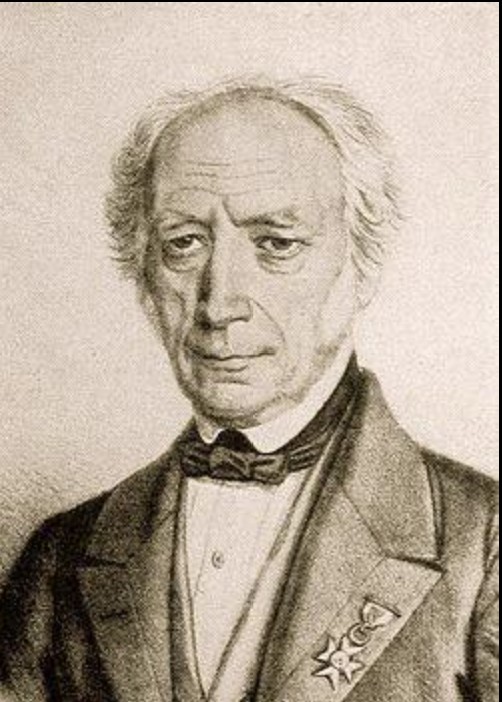
December is a month for reflection, a time to look back on the past year before looking ahead to the new one. In 2025, there was so much great music to share that I wasn’t able to fit all of it in! So this December, the Daily Classical Music Post will revisit the theme for each month and share a few of the works that didn’t make the cut.
Pietro Raimondi – Il Giudizio Universale
[July 2025: Thank you to everyone who subscribes to and supports the Daily Classical Music Post. This July, I will be sharing some favourite posts from the DCMP archives. A new theme will begin in August!]
First posted 20 December 2015
Today is the anniversary of the birth of the Italian composer Pietro Raimondi (20 December 1786–30 October 1853).
Raimondi was a pivotal figure in the period between the Classical and Romantic eras. He was known mainly for his operas and sacred music. However, he also was a great musical experimenter. His obsession with counterpoint and all its possibilities led him to compose dozens of fugues for many voices. He anticipated some 20th-century composers by writing simultaneous fugues in different keys and modes for multiple groups of different instruments. Because he saw this as just experimentation, he did not incorporate any of these fugues into his early operas.
Once he realised that, although his operas were successful enough, he would never be as famous as Rossini, Bellini, and Donizetti, he decided to write more sacred music. He did display his love and mastery of counterpoint much more in his sacred works. He also published a treatise on counterpoint in 1836, when he began writing his experimental compositions for multiple choruses and orchestras.
His innovations in musical simultaneity produced his great triple oratorio, Putifar/Giuseppe/Giacobbe (1848). This work, a set of three independent oratorios meant to be performed first consecutively, and then simultaneously, was one of the first experiments of this type in the twentieth century. The triple oratorio premiered in Rome in 1853. Raimondi anticipated Ives by many years! After he wrote this triple oratorio, he then composed a double opera, also meant to be performed consecutively and simultaneously. Unfortunately, Adelasia/I quattro rustici was unfinished at the time of his death, and it hasn’t ever been staged. This serious and comic opera duo was designed to comment on each other in the simultaneous performance.
My classical music post for today is the introduction to Part II of Pietro Raimondi’s oratorio Il Giudizio Universale.


Leave a Reply