

December is a month for reflection, a time to look back on the past year before looking ahead to the new one. In 2025, there was so much great music to share that I wasn’t able to fit all of it in! So this December, the Daily Classical Music Post will revisit the theme for each month and share a few of the works that didn’t make the cut.
Debussy: Préludes / Book 1, L. 117: VI. Des pas sur la neige
[August 2025: “Everybody talks about the weather, but nobody does anything about it.”—Charles Dudley Warner
Classical music composers may not do anything about the weather, but they often have been inspired by weather and other natural phenomena. This August, the Daily Classical Music Post will explore some of these works and learn about the ways that different combinations of instruments can depict storms, volcanic eruptions, and climate change.]
The French composer Claude Debussy (1862–1918) was never happy to be classified as an Impressionist composer, but there’s no getting away from the fact that his music is the epitome of creating a mood, an atmosphere, and his use of tonal colours ushered in the Impressionist movement in music composition. Some of the best examples of this are his Préludes, two books of 12 piano pieces. Debussy placed the descriptive titles at the end rather than the start of each prelude, allowing listeners to form their own “impression.” (This is one of the hallmarks of the Impressionist movement.)
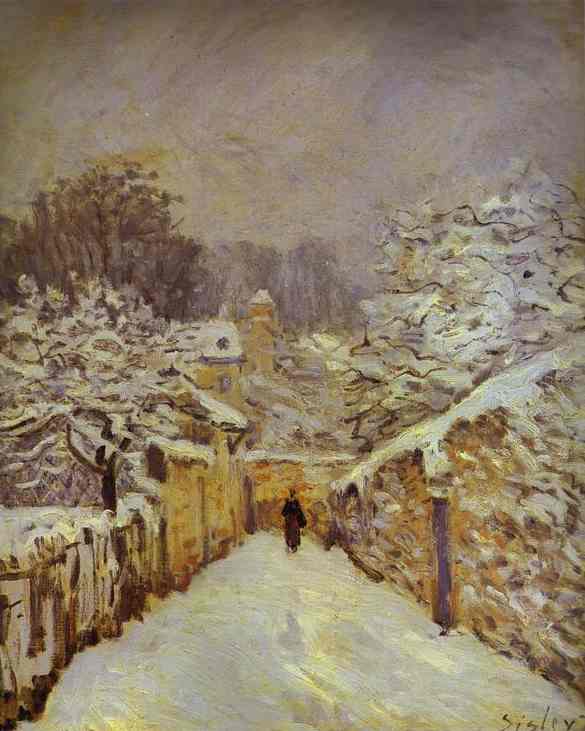
The mood that Debussy created in Des pas sur la neige (Footprints in the Snow), completed in 1909 and published in 1910 in his Préludes Book I, is calming and gentle, like the feeling one gets when walking outdoors just after a fresh snowfall. It’s not entirely clear what, if any, was Debussy’s inspiration for this piece, although it has been suggested that a painting by Alfred Sisley, La neige à Louveciennes (Snow at Louveciennes, painted in 1875) was in his mind as he composed the work.
Azusa Ueno wrote, “Des pas sur la neige (Footsteps in the Snow, No. 6) shows Debussy’s unparalleled creativity in using harmonic colors. An omnipresent ostinato runs throughout as a representation, perhaps, of a barren, snow-covered land. Musically, a similar parallel exists: it is a ‘blank’ canvas upon which an array of harmonies are added at different points. These rich sonorities transform the scenery from desolate to ominous to poignant, all before returning to the original key of D minor.”
My classical music post for today is Claude Debussy: Des pas sur la neige.


Leave a Reply