

December is a month for reflection, a time to look back on the past year before looking ahead to the new one. In 2025, there was so much great music to share that I wasn’t able to fit all of it in! So this December, the Daily Classical Music Post will revisit the theme for each month and share a few of the works that didn’t make the cut.
Suite for Cello and Piano: I. Andante
[July 2025: Thank you to everyone who subscribes to and supports the Daily Classical Music Post. This July, I will be sharing some favourite posts from the DCMP archives. A new theme will begin in August!]
First posted 27 April 2014
Today is the anniversary of the birth of the Russian-born American musician and author Nicolas Slonimsky (27 April 1894–25 December 1995).
Slonimsky is known particularly for his editorship of Baker’s Biographical Dictionary of Musicians and also for his Thesaurus of Scales and Melodic Patterns. He taught at Boston Conservatory and the Malkin Conservatory. He also formed the Boston Chamber Orchestra in 1927, which performed works by contemporary composers. He also was a good friend of Frank Zappa, and even performed with Zappa in 1981. Slonimsky’s autobiography, Perfect Pitch, is filled with wonderful stories about many well-known musicians, including Serge Koussevitzky, Charles Ives, Henry Cowell, Igor Stravinsky, and Frank Zappa.
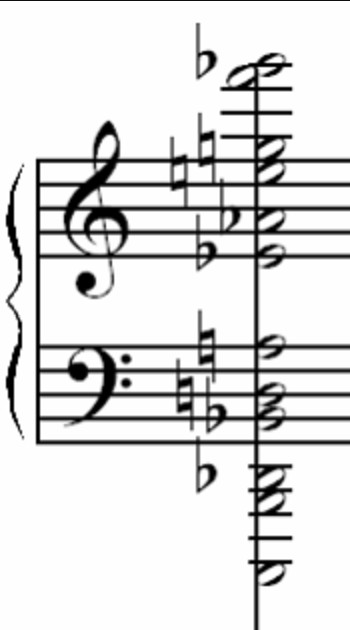
In 1938, Slonimsky invented the “Grandmother chord” (pictured below), which contains all twelve tones and all eleven intervals. The grandmother chord is spelled as follows: going up: c–b–d flat–b flat–d–a, going down: a flat–e flat–g–e–f sharp–f. He wrote piano pieces and lieder, and his Five Advertising Songs are particularly memorable. (Hear Slonimsky performing his “Children Cry for Castoria” on YouTube: Children Cry for Castoria – Nicolas Slonimsky; it is priceless!)
My classical music post for today is the first movement of Nicolas Slonimsky’s Suite for Cello and Piano.


Leave a Reply