

There are two categories of classical music that use visual art as the subject of the composition. “Inspired-by” music takes a work of art as a notional starting point, whereas “ekphrastic” music aims to comment on or illuminate the visual artwork. This November, the Daily Classical Music Post will explore music based on visual art from the Renaissance to the 21st century.
Fine: Drama For Orchestra: The Embrace
The Norwegian painter Edvard Munch created one of the most iconic paintings in the history of art, The Scream, but many of his other paintings are just as emotional, involving intense subjects including love, anxiety, jealousy, and betrayal. His early works were in a Naturalist and Impressionist style, but he moved away from that by the late 1880s, becoming more of an Expressionist painter in his later years.
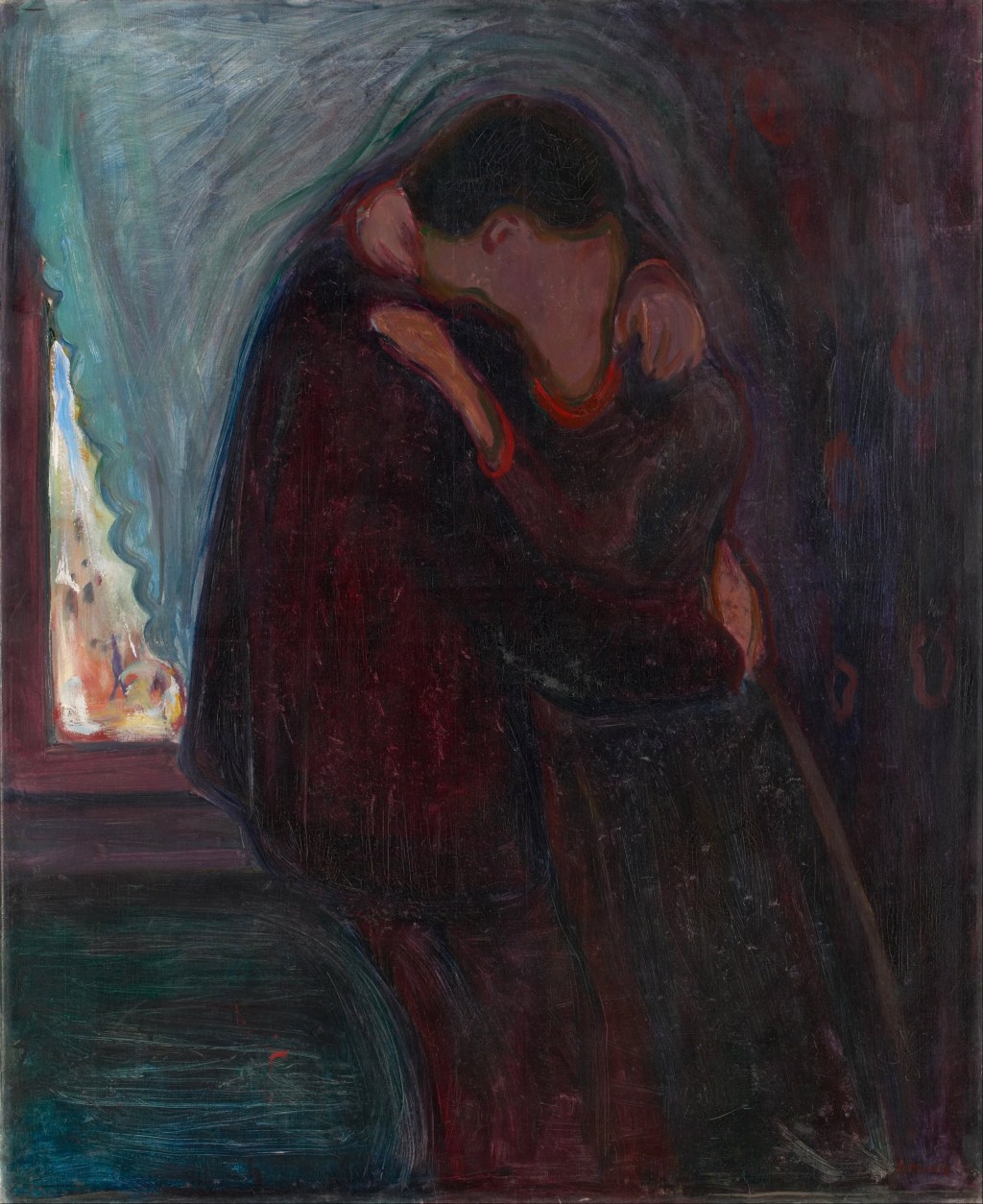
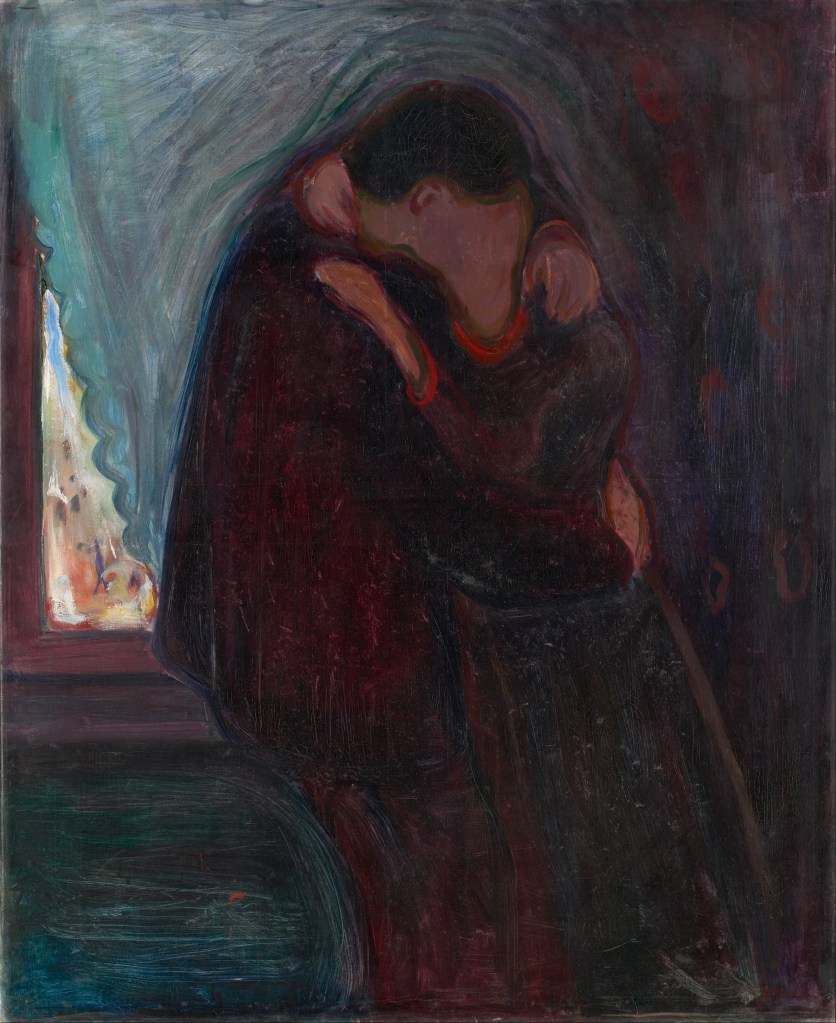
The early compositions of the American composer Vivian Fine (1913–2000) were dissonant, but she had a period of more tonal music in the late 1930s and early 1940s before returning to a more expressive and freer style. The five-movement Drama For Orchestra (after paintings by Edvard Munch) was commissioned by the San Francisco Symphony in 1982 and received its premiere in 1983. It was a finalist for the 1983 Pulitzer Prize in Music. The paintings that inspired this orchestral work are Midsummer Night; The Embrace; Jealousy; The Scream; and Two Figures by the Shore.
The composer wrote in the programme notes, “The Embrace: Two lovers rush toward each other in surging movements of ardent love. The tempo is quickened with a warm, lyrical impulse flowing through the wide-ranging melodic line played by strings reinforced by winds. This is taken up by lower strings and is an inversion of the top line. Over the bass and cello, which invert the opening melodic sweep, is a motif in thirds added by wind instruments that moves in another rhythm. An additional element comes in blocks of minor chords. These materials are freely developed and combined, the movement ending quietly with a solo violin accompanied by vibraphone, harp, pizzicato cellos, and double basses.”
Robert Commanday wrote, “The wide-spaced range of the scoring, the sparseness, suggests the dimensions of night and its stillness, while coloristic ideas, splashing and penetrating, create inflections with compelling overtones. The harmonic strength in Fine’s music originates in part with chordal structures formed from her melodies. At times, too, there are real bass lines. But this is not old-fashioned technique, and not systematic, but the consequence of the music’s need. This quality and the potent rhythmic impulse that courses through and generates Fine’s music made one movement, ‘The Embrace,’ the most impressive for me. The flow and sweep are beautiful. Novel sounds and colors are found in the work, but not calling attention to themselves, serving rather the expressive purposes.”
My classical music post for today is Vivian Fine: Drama For Orchestra: The Embrace.


Leave a Reply