

There are two categories of classical music that use visual art as the subject of the composition. “Inspired-by” music takes a work of art as a notional starting point, whereas “ekphrastic” music aims to comment on or illuminate the visual artwork. This November, the Daily Classical Music Post will explore music based on visual art from the Renaissance to the 21st century.
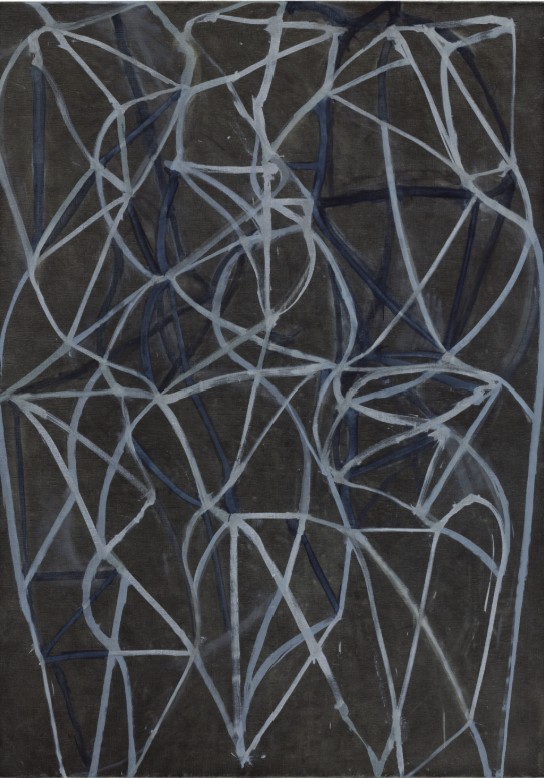
Abstractions: V. Three (Inspired by Brice Marden’s 3, 1987-88)
The artworks by the American minimalist, abstract expressionist, color field painter, and lyrical abstractionist artist Brice Marden are among the most coveted of any 20th-century American artist. Auction prices for Marden’s works are nearly as high as those for the old masters. 3 is an abstract oil painting by Marden, created between 1987 and 1988, and is part of a series of works from the same period. 3 was formerly in the collection of the Baltimore Museum of Art but was sold to benefit the endowment of the future of the museum.
The English composer Anna Clyne (born 1980) works in both acoustic and electroacoustic music. She is among the 50 most performed living composers in the world. Clyne composed Abstractions in 2016. She based this orchestral suite’s five movements on pieces of artwork from the Baltimore Museum of Art. The fifth movement, “Three,” was inspired by Brice Marden’s 3.
Clyne wrote in the programme notes, “Abstractions is a suite of five movements inspired by five contrasting contemporary artworks from the Baltimore Museum of Art and from the private collection of Rheda Becker and Robert Meyerhoff, for whom this music honors. . . . In drawing inspiration from these artworks, I have tried to capture the feelings or imagery that they evoke, the concept of the work, or the process adopted by the artists. Such examples are . . . the lines, which, inspired by Asian calligraphy and the structure of seashells, appear to dance in Marden’s 3.”
Robert Battey wrote, “The swooping arpeggios of the closing section, ‘Three,’ give the work a giddy, exhilarating send-off.” Tim Smith wrote, “Knowing the images helps bring the music into focus, but the five-movement work easily stands on its own, thanks to the clarity and expressive nuance of Clyne’s writing.”
My classical music post for today is Anna Clyne: Abstractions, V. Three.


Leave a Reply