

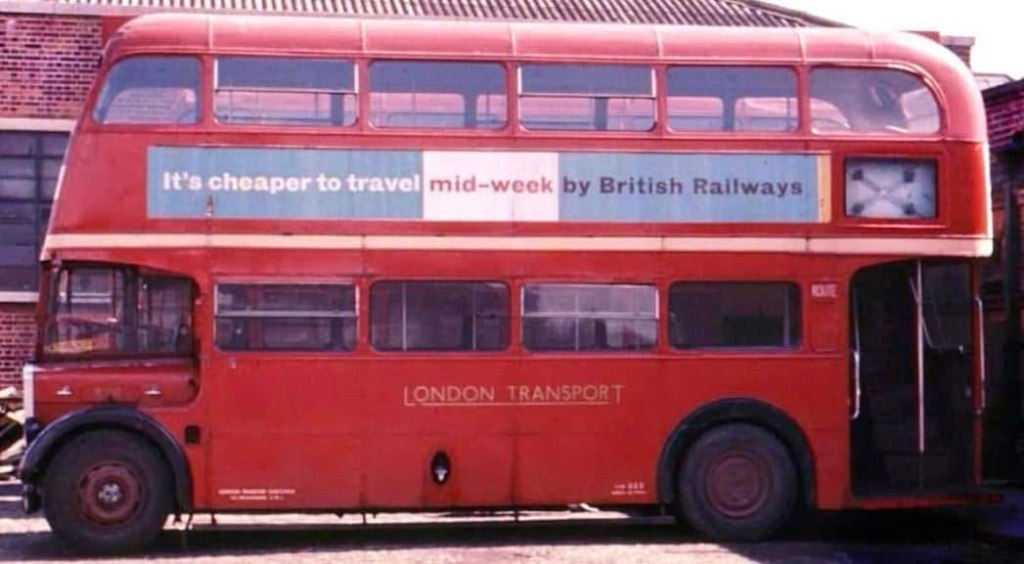
Music is a journey, taking listeners on an emotional and sometimes adventurous sonic path through time to new places both physical and spiritual. Some composers have chosen actual methods of transportation as their theme for this excursion. This October, the Daily Classical Music Post will feature music celebrating methods of transportation, from the land to the sea to the air.
London Transport Suite: Rosie the Red Omnibus
Public transport in London can be dated back to 1829, when the first horse-drawn omnibuses began service. Motorized omnibuses were introduced in 1902. The above-ground and underground services combined forces just before World War I. In 1933, the combined underground and overground trains, coaches, trolleybuses and trams, and buses adopted the name London Transport. This name continued to be seen on buses until 1986, when the government of Margaret Thatcher privatized the bus operating industry throughout Great Britain.
The London Transport Museum website says, “The bus is London’s oldest form of public transport. The coachbuilder George Shillibeer began his service from Paddington to Bank in 1829, but unlike the long-established stage coach services, passengers did not need to book in advance and could hail the vehicle at any point on the route. Shillibeer called his service Omnibus (meaning ‘for all’ in Latin), though it was not affordable to most working people at the time. He gave us the abbreviation ‘bus’, now an internationally recognised term.”
In 1957, the BBC Light Music Festival commissioned the British light music composer Sidney Torch (1908–1990) to write a work commemorating London’s transport system. The main inspiration of his London Transport Suite was the withdrawal of the very popular “Brighton Belle” train that ran between London and Brighton; Torch said, “The three movements therefore describe modes of transport no longer with us.” These movements celebrate the “Hansom Cab,” “Rosie, The Red Omnibus,” and “The 5.52 from Victorloo” (the last combining Victoria and Waterloo rail stations). Andrew Lamb wrote, “[H]is London Transport Suite . . . comprises endearing portraits of various modes of travel of yesteryear.”
John France wrote, “The second movement pays respects to Rosie, The Red Omnibus. She was the precursor of the Routemasters and Boris’s Buses. Torch has portrayed Rosie by the tuba and comes complete with an old-fashioned horn. There is a lot of wheezing as it progresses along The Strand. Once again, a splendid melody is introduced, suggesting that the bus finally gets moving.”
My classical music post for today is Sidney Torch: London Transport Suite: “Rosie, The Red Omnibus.”


Leave a Reply