

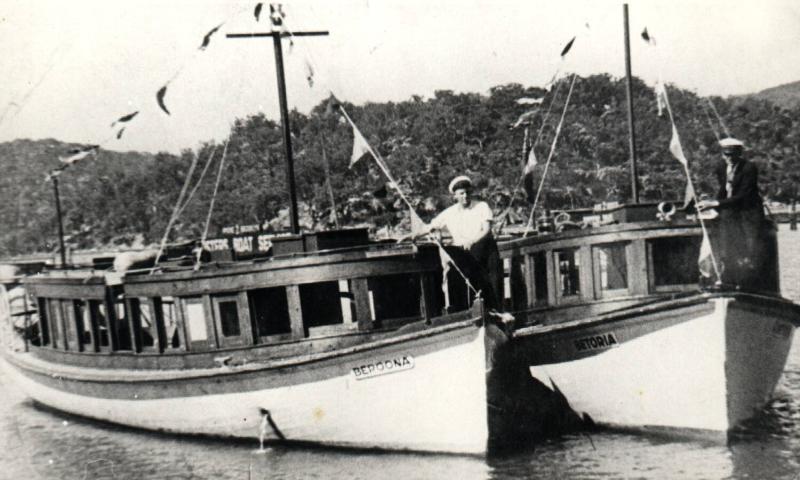
Music is a journey, taking listeners on an emotional and sometimes adventurous sonic path through time to new places both physical and spiritual. Some composers have chosen actual methods of transportation as their theme for this excursion. This October, the Daily Classical Music Post will feature music celebrating methods of transportation, from the land to the sea to the air.
Britten: Curlew River, Op. 71 – “I am the ferryman”
The earliest recorded mention of ferries and ferrymen is in Greek mythology: Charon was the ferryman who transported souls via boat to the Underworld across the River Styx. The first “roll-on roll-off” (ro-ro) ferry for freight sea transportation began operations in 1850 in Scotland, and ro-ros quickly caught on. The first ferry to transport horse carriages was launched in 1871 in Istanbul. This was the precursor to the car ferry. Ferries are still a popular and important method of transportation worldwide, particularly in areas where building a tunnel or bridge is cost-prohibitive or impractical.
The English composer Benjamin Britten (1913–1976) composed Curlew River—A Parable for Church Performance in 1964. (This was the first of his three “Parables for Church Performance.”) Britten and his librettist William Plomer based the story on the Japanese Nō play Sumidigawa. The synopsis on the Britten Pears Arts website says, in part, “The Abbot comes forward to address the congregation and introduces the mystery to be enacted. The Monks prepare for the performance. The Ferryman steps forward and reveals that a memorial service is to take place that day at a shrine on the far bank of the Curlew River. . . . The Ferryman delays departure to listen to the demented singing of a Madwoman who is approaching the boat. The Madwoman enters, singing of her lost child. After some resistance, the Ferryman agrees to take her across the river. During the crossing, the Ferryman relates the story of a stranger who, a year before, had arrived in his boat accompanied by a young boy of noble parentage who subsequently died from illness and exhaustion. The Madwoman . . . questions the Ferryman about the event and it becomes clear that the child was her abducted son.”
All of the roles in this music drama were composed for tenor and bass, with the exception of the Spirit of the Boy, which was written for treble. Peter Pears, the famous tenor who was Britten’s partner for 40 years, sang the role of the Madwoman at the premiere in 1964. The instrumentation is relatively sparse: flute (symbolizing the Madwoman), horn (symbolizing the Ferryman), viola, double bass, harp, percussion, and chamber organ. Britten specifically wrote that there would be no conductor; instead, each instrumentalist has an instruction in the score specifying when they should lead the group. He also employed tone clusters and other musical techniques to simulate traditional Japanese instruments in a nod to the story’s origin.
My classical music post for today is Benjamin Britten: Curlew River: “I Am the Ferryman.”


Leave a Reply