

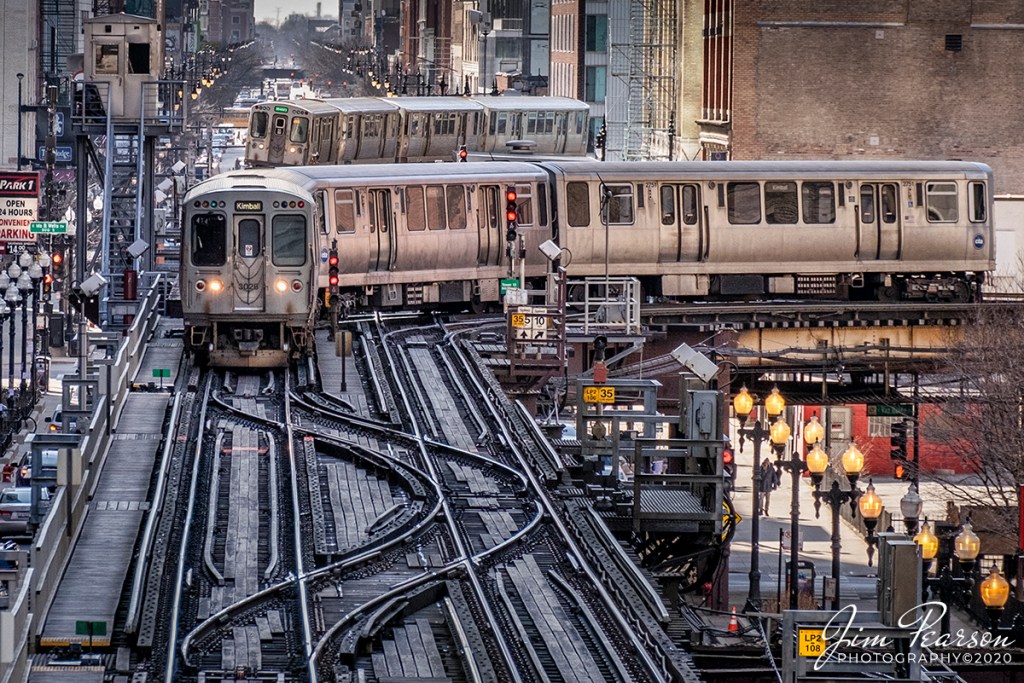
Music is a journey, taking listeners on an emotional and sometimes adventurous sonic path through time to new places both physical and spiritual. Some composers have chosen actual methods of transportation as their theme for this excursion. This October, the Daily Classical Music Post will feature music celebrating methods of transportation, from the land to the sea to the air.
In some cities, it wasn’t practical to build an underground rapid transit system for various reasons, and surface systems would require too many level crossings, disrupting traffic flow, so city planners developed elevated railways. Elevated railways were particularly popular in U.S. cities from the late 1860s, with the first el trains in the USA beginning service in New York City. Chicago built an elevated system, known as the “L”, which began service in 1892. The “L” is currently operated by the Chicago Transit Authority; it is the fourth-largest rapid transit system in the USA in terms of total route length and the third-busiest rapid transit system in the USA. The “L” is made up of eight lines, all identified by colour, and some of the lines have underground sections.
The American composer Lawrence Axelrod (born 1960) lived near a Brown Line stop in Chicago and took that train almost every day to go to and from work. In 2016, he composed Brown Line for small orchestra and electronics. He described the piece as “a scherzo, sort of.” He wrote in his programme notes, “The ‘L’ is an amazing way to move people around the city and is a vital urban resource. It is also a source of frustration, crowding and difficulty. I decided to run with the nightmare aspect, turning a ride on the ‘L’ into a kind of horror movie scenario.”
Part of that “horror movie scenario” includes quotations from the Witches Sabbath movement of Hector Berlioz’s Symphonie fantastique. As you listen to this sometimes melodic, sometimes dissonant and jarring, work, you can feel the pent-up frustrations of thousands of Chicagoans who deal with the Brown Line every day. The way in which Axelrod has integrated the sounds of the Brown Line with the orchestra make it obvious why he has been described as a “composer whose fresh and distinctive music deserves to be more widely known.”
My classical music post for today is Lawrence Axelrod: Brown Line.


Leave a Reply