

Music is a journey, taking listeners on an emotional and sometimes adventurous sonic path through time to new places both physical and spiritual. Some composers have chosen actual methods of transportation as their theme for this excursion. This October, the Daily Classical Music Post will feature music celebrating methods of transportation, from the land to the sea to the air.
The Andree Expedition: No. 2. The Balloon Rises
Hot air balloons and gas (hydrogen or helium) balloons that were fit for human transportation were developed in the late 18th century, and much of today’s balloon technology is similar, although more sophisticated. My earliest memory of a hot air balloon has to be of the balloon at the end of the 1939 film The Wizard of Oz, when Dorothy is left stranded in Oz after the wizard takes off without her. I think that’s probably why I’ve never really taken to hot air balloons: they are too unpredictable, seemingly too uncontrollable, and that worries me. I love seeing them in the sky, but there is no way that I would ever get in one.
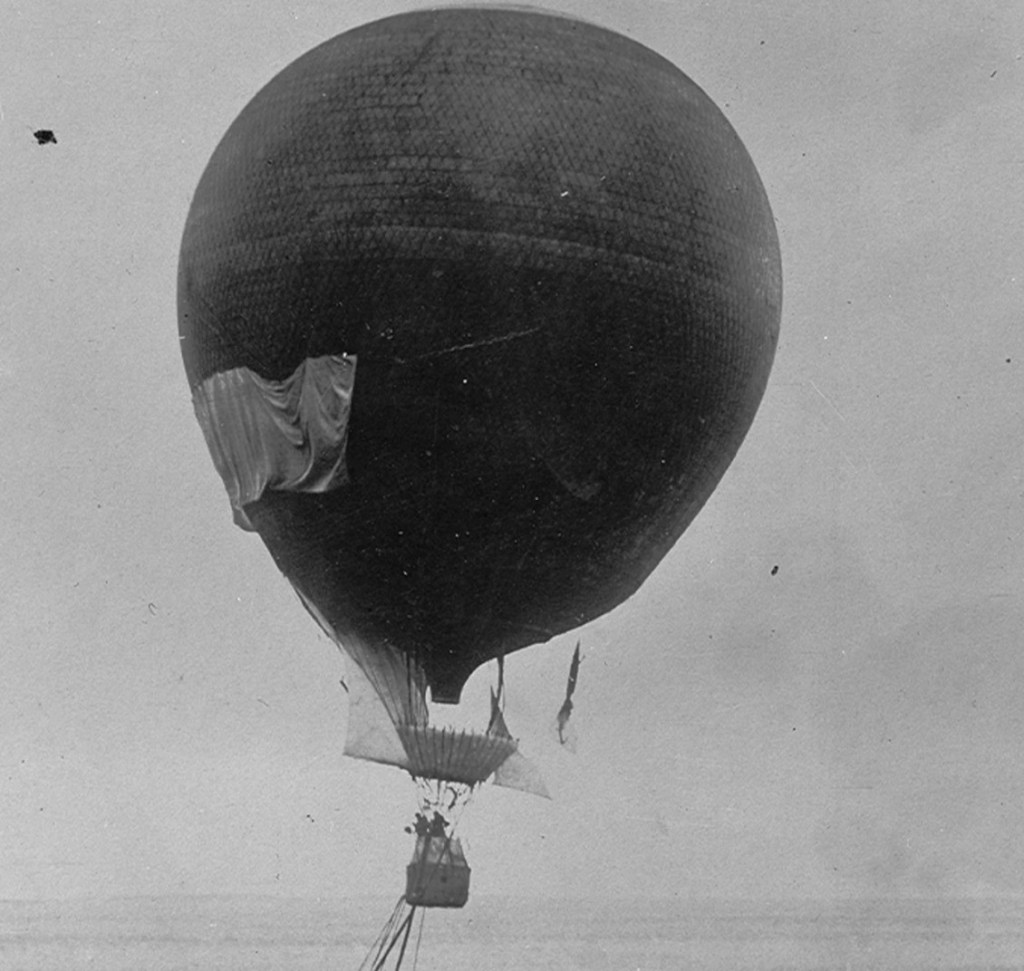
The American composer Dominick Argento (1927–2019) was best known for his operas and vocal works. Argento based his 1982 song cycle The Andrée Expedition, for baritone and piano, on the failed Swedish expedition to the North Pole led by Salomon August Andrée. Andrée’s 1897 expedition failed, mostly because the balloon started leaking hydrogen almost as soon as they took off, and they crashed two days after the expedition began. The three crew members (including Andrée) survived the crash but perished in the harsh Arctic conditions, as they were totally unprepared for the terrain and weather.
Argento took as the text for his work diary entries from Andrée and Nils Strindberg, one of the other members of the expedition, which were discovered with the bodies 33 years after the disaster. No. 2, The Balloon Rises, is from a letter that Strindberg wrote to his fiancée Anna. Strindberg tells her about the takeoff: “Dearest Anna, It was grand when at last it was determined that we should start. Andrée asked us: ‘Well shall we try it or not?’ Frænkel at first answered evasively, but then said that he should. I answered, ‘I think we ought to try it.’ Andrée was serious and said nothing. Now my thoughts turned to you and to my parents and friends at home. How would the journey succeed? And how fast my thoughts came. ‘Cut away everywhere!’ comes Andrée’s voice. Three knives cut the three lines and the balloon rises, rises amid the cheers of those below. A peculiar sensation, wonderful, indescribable! We still hear the hurrahs at a distance. And then: silent and still. At seven o’clock mists begin. Andrée goes to his berth to rest. A blackbird circles a moment in the distance then disappears in the fog. The sun has gone. Goodnight.”
The baritone Michael Chioldi said in an interview, “The music is beautiful, hauntingly beautiful I would say. It’s melodic and dissonant at the same time. It’s everything you want it to be—it’s a real piece of genius. . . . What’s really striking to me is how the music reflects the text so well. That’s the genius of Dominick Argento.”
My classical music post for today is Dominick Argento: The Andrée Expedition: No. 2, The Balloon Rises.


Leave a Reply