

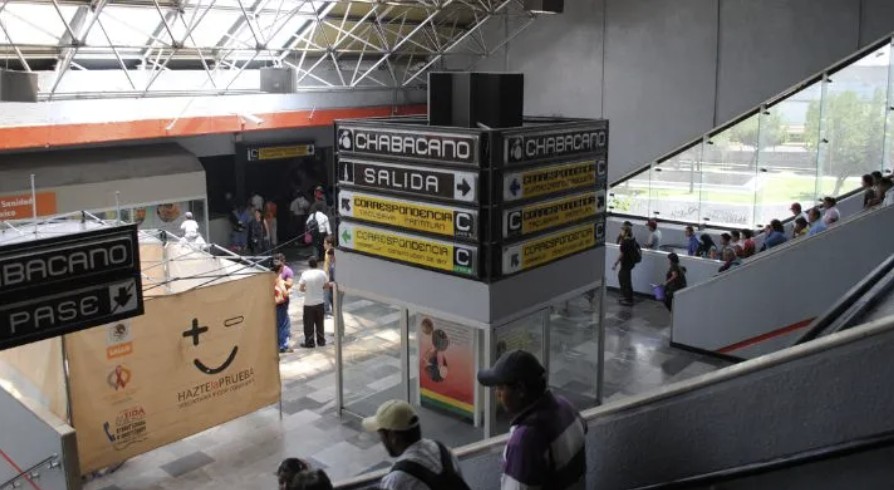
Music is a journey, taking listeners on an emotional and sometimes adventurous sonic path through time to new places both physical and spiritual. Some composers have chosen actual methods of transportation as their theme for this excursion. This October, the Daily Classical Music Post will feature music celebrating methods of transportation, from the land to the sea to the air.
Metro Chabacano – J Alvarez ::: Matangi Quartet – Vrije Geluiden
Most major cities around the world have underground rapid transit systems. The first underground line opened in London in 1863, and the success of that line convinced planners in other cities to develop their own systems. The second largest metro system in North America is in Mexico City. The first line there opened in 1969 and the system is still being expanded. The construction of the Mexico City metro has led to thousands of important archaeological discoveries, and many of the stations were designed by famous Mexican architects.
Chabacano is one of the major transfer stations in Mexico City, linking Lines 2, 8, and 9. The name of the station comes from the apricot trees that were planted and flourished in the area (“chabacano” means “apricot” in Mexican Spanish). The logo of the station is, of course, an apricot. The station is well known for several things, including its use as a location for several scenes in the film Total Recall. There are three giant murals by the Portuguese artist José de Guimarães, donated by the Lisbon Metro. The lobby is large and cultural events often take place there.
The Mexican composer Javier Álvarez (1956–2023) was lauded for the fascinating way that he combined traditional Mexican music with European styles. In 1988, he composed the string quartet Metro Chabacano to accompany an exhibition by the Mexican artist Marco Límenes that was being held in the lobby of the station. Álvarez said that the piece was “a continuous eight-note movement of moderately driving speed from which short melodic solos emerge for each instrument . . . although the piece is brief and in single movement, the rhythms, accents and melodic fragments that emerge from the perpetual motion background are intricately playful.”
William Yeoman described Metro Chabacano as a “hypnotic ‘one-movement moto perpetuum’” that is “superbly crafted.” Jacques Sagot wrote, “The piece is kinesthetic, hypnotic, motoric. At the end, the violin’s whistles evoke the braking of the train, the creaking of the rubber, the arrival of the subway at the station that gives the piece its name. Is the ending a memento mori ? No: the imminent departure of the new train announces the cyclical renewal of life! The arrival of some passengers is the departure of others: everything moves on.”
My classical music post for today is Javier Álvarez: Metro Chabacano.


Leave a Reply