

Music is a journey, taking listeners on an emotional and sometimes adventurous sonic path through time to new places both physical and spiritual. Some composers have chosen actual methods of transportation as their theme for this excursion. This October, the Daily Classical Music Post will feature music celebrating methods of transportation, from the land to the sea to the air.
Drei gemischte Chöre: III. Gondoliera
“Oh, come to me when daylight sets; / Sweet! then come to me, / When smoothly go our gondolets / O’er the moonlight sea.”—Thomas Moore
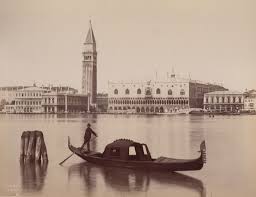
What can be more romantic than a ride on a gondola? These traditional flat-bottomed Venetian rowing boats were not always just for lovers, however. They were one of the major means of transportation on Venice’s canals from the time of their introduction in the 11th century. In the 17th and 18th centuries, there were nearly 10,000 gondolas in use by Venetians, but now there are only around 400, and these are used primarily in the tourism industry. No one is quite sure where the word “gondola” came from, although some historians think it was the name of a type of boat in India that was brought to Venice by merchants.
The German composer Clara Schumann (1819–1896) was one of the greatest concert pianists in 19th-century Europe. As a pianist, she was very confident composing for the piano, but she was less sure about her ability to compose for voice, although her husband Robert encouraged her to do so. She wrote in her diary, “Whenever Robert goes out, I spent my time trying to compose a song, and finally was able to complete three which I intend to give him for Christmas. They may be of no value whatsoever, that I admit, only a very feeble effort, but I’m counting on Robert’s leniency and that he’ll think that I meant well in fulfilling this wish for him, as in fulfilling all his wishes.”
Schumann composed Drei gemischte Chöre for a cappella mixed choir in 1848. The third piece, “Gondoliera,” set to a text by Thomas Moore and translated into German by the poet Emanuel Geibel, celebrates the gondola boats and gondoliers. She composed this for her husband’s 38th birthday. These pieces were not actually published until 1989 although they were performed often from the manuscript. “Gondoliera” is an ode to love, written in a high Romantic style with a beautiful melody.
Gerald Fenech wrote, “We often overlook Clara Schumann in favour of her more illustrious husband Robert, but it is common knowledge that she was a composer of superior craftsmanship and excellent prowess.” Jeremy Pound wrote, “The song of the Venetian gondoliers is represented perhaps most sublimely in Clara Schumann’s 1848 song ‘Gondoliera’.”
My classical music post for today is Clara Schumann: “Gondoliera.”


Leave a Reply