

“Everybody talks about the weather, but nobody does anything about it.”—Charles Dudley Warner
Classical music composers may not do anything about the weather, but they often have been inspired by weather and other natural phenomena. This August, the Daily Classical Music Post will explore some of these works and learn about the ways that different combinations of instruments can depict storms, volcanic eruptions, and climate change.
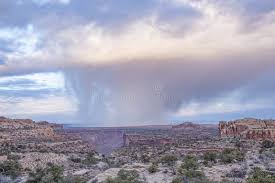
A cloudburst usually happens when warm moist air over mountain foothills lifts up. This leads to the quick formulation of condensation, and the clouds get so heavy that they have to release the water as fast as possible. In the desert, cloudbursts can cause flash floods. In many cases, cloudbursts are accompanied by lightning, thunder, strong gusts of wind, and even hail.
The American composer Eric Whitacre (born 1970) began composing the eight-part choral work Cloudburst in 1991 and completed it in 1995. Whitacre was inspired by seeing a desert cloudburst when composing the piece. He adapted his text from a poem by the Mexican poet Octavio Paz, El cántaro roto. Cloudburst begins with a sustained dissonant a cappella section, and also includes piano and percussion accompaniment, including handbells, windchimes, and thunder sheets.
Bernard Hughes wrote, “Written when he was only 21, it sets a text adapted from Octavio Paz about rain coming to a parched land. The variety of textures, from solo moments to full tutti, were well handled by the large choir and the Spanish pronunciation was very convincing. But the piece is memorable above all for the coup de théâtre at the end, when the singers start clicking their fingers to simulate rainfall, which is then taken up by the audience to create a panoramic soundscape. This is a contemporary choral classic and deserves its reputation.” Meurig Bowen wrote, “Cloudburst reveals through some striking effects Whitacre’s keen imagination for colour. Piano and percussion (including wind chimes and thunder sheets) are joined by handbells, as well as clapping, finger-clicking and thigh-tapping by the singers to create, most effectively, a simulated rainstorm. . . . New-agey stuff on paper, perhaps, but the musical results are wholly convincing and lacking in phoniness. Magical new sounds, singability and a special atmosphere, simply and resourcefully achieved.”
My classical music post for today is Eric Whitacre’s Cloudburst.


Leave a Reply