

“Everybody talks about the weather, but nobody does anything about it.”—Charles Dudley Warner
Classical music composers may not do anything about the weather, but they often have been inspired by weather and other natural phenomena. This August, the Daily Classical Music Post will explore some of these works and learn about the ways that different combinations of instruments can depict storms, volcanic eruptions, and climate change.
Symphony No. 50, Op. 360, “Mount St. Helens”: III. Volcano: Adagio – Allegro
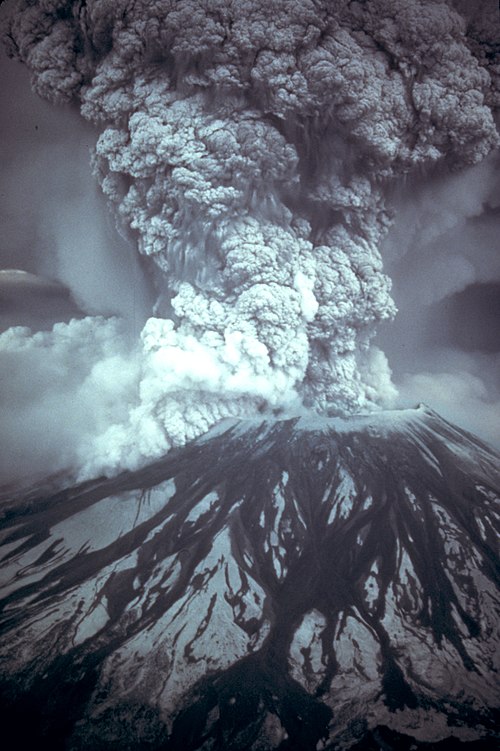
Some time just around 8:32 a.m. local time on 18 May 1980, volcanologist David Johnson sent out his last-ever radio transmission: “Vancouver! Vancouver! This is it!” “It” was the long-expected eruption of Mount St. Helens, one of the volcanos in the Cascade Volcanic Arc. Before the eruption, Mount St. Helens was known as the Fuji-san of America because of its symmetry and extensive snow and ice cover. In a matter of minutes, all of that was gone. Steve Olson wrote, “The world is impermanent—the eruption of Mount St. Helens showed how quickly and drastically things can change.”
The American composer Alan Hovhaness (1911–2000) lived just north of Mount St. Helens. In 1981, he began writing a three-movement orchestral work, Symphony No. 50, Op. 360, Mount St. Helens, to a commission from his publisher. The symphony was completed in January 1982 and received its premiere in March 1984.
Hovhaness wrote in the programme notes, “When Mount St. Helens erupted on the morning of May 18, 1980, the sonic boom struck our south windows. Ashes did not come here at that time but covered land to the east all across the State of Washington into Montana. Ashes continued to travel all around the world, landing lightly on our house a week later, after their journey all around our planet.”
Symphony No. 50 is in three movements: 1. Andante; 2. Allegro (“Spirit Lake”); and 3. Adagio-Allegro (“Volcano”). The music is a typical Hovhaness blend of Western and Eastern scales and melodies. Andrew Achenbach wrote, “The last movement, ‘Volcano’, erupts with a vengeance […]. The pounding central portion achieves a frightening momentum, and Hovhaness’s sense of orchestral spectacle (such as those odious, yet startlingly effective trombone glissandos from 2’48” onwards) produces some often thrilling sounds—no wonder the symphony went down so well with the public at its Seattle premiere.”
My classical music post for today is Alan Hovhaness’s Symphony No. 50, Op. 360, Mount St. Helens.


Leave a Reply