

“Everybody talks about the weather, but nobody does anything about it.”—Charles Dudley Warner
Classical music composers may not do anything about the weather, but they often have been inspired by weather and other natural phenomena. This August, the Daily Classical Music Post will explore some of these works and learn about the ways that different combinations of instruments can depict storms, volcanic eruptions, and climate change.
Liszt: 12 Etudes d’exécution transcendante, S. 139: XII. Chasse-neige. Andante con moto
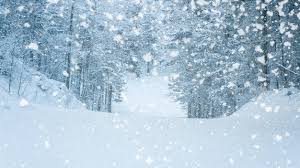
The Hungarian Romantic composer and virtuoso pianist Franz Liszt (1811–1886) wrote several pieces that were inspired by nature and weather. One of the most notoriously difficult to play, but also one of the most incredible, is the last of the Transcendental Études, S. 139, “Chasse-neige.” The Transcendental Études were originally composed in 1827, and then Liszt reworked them twice, in 1839 and 1852.
Sudip Bose wrote, “These virtuosic works, some of the most difficult in the piano literature, are also expressions of the highest poetry, many of them bearing descriptive, narrative titles. . . . Ferrucio Busoni, an outstanding early interpreters of the etudes, called Chasse-neige “the noblest example, perhaps, amongst all music of a poetising nature—[of] a sublime and steady fall of snow which gradually buries landscape and people.” Indeed, if there is a more visceral musical depiction of whirling snow and bone-chilling winds, I have yet to hear it. The technique that Liszt uses to conjure up this magic is the tremolando, that is, the rapid alternation between notes that produces a trembling effect.”
Johann D’Souza wrote, “The last in the set is the Chasse-neige (‘Snowplough’), which can be viewed as the greatest of Studies. It is unique in its mood of desolation—it has been poetically described as snow-flakes gradually covering and burying the whole world. A study of nature at her most merciless.” Robert Cummings wrote, “Chasse-neige is rather unique, quite in a class by itself, an early example of Impressionism. It is full of tension and menace, but filled also with sadness and passion, and yet it depicts an act of indifferent nature—a snow storm. But as the snow piles up with wind whirling, one hears (at least I do) the struggles of life building and encroaching.”
My classical music post for today is Franz Liszt’s Transcendental Études, S. 139, XII. “Chasse-neige.”“Everybody talks about the weather, but nobody does anything about it.”—Charles Dudley Warner
Classical music composers may not do anything about the weather, but they often have been inspired by weather and other natural phenomena. This August, the Daily Classical Music Post will explore some of these works and learn about the ways that different combinations of instruments can depict storms, volcanic eruptions, and climate change.
Liszt: 12 Etudes d’exécution transcendante, S. 139: XII. Chasse-neige. Andante con moto
The Hungarian Romantic composer and virtuoso pianist Franz Liszt (1811–1886) wrote several pieces that were inspired by nature and weather. One of the most notoriously difficult to play, but also one of the most incredible, is the last of the Transcendental Études, S. 139, “Chasse-neige.” The Transcendental Études were originally composed in 1827, and then Liszt reworked them twice, in 1839 and 1852. The 1839 version was impossible for anyone other than Liszt to play; the 1852 revision was only marginally easier.
Sudip Bose wrote, “These virtuosic works, some of the most difficult in the piano literature, are also expressions of the highest poetry, many of them bearing descriptive, narrative titles. . . . Ferrucio Busoni, an outstanding early interpreters of the etudes, called Chasse-neige ‘the noblest example, perhaps, amongst all music of a poetising nature—[of] a sublime and steady fall of snow which gradually buries landscape and people.’ Indeed, if there is a more visceral musical depiction of whirling snow and bone-chilling winds, I have yet to hear it. The technique that Liszt uses to conjure up this magic is the tremolando, that is, the rapid alternation between notes that produces a trembling effect.”
Johann D’Souza wrote, “The last in the set is the Chasse-neige (‘Snowplough’), which can be viewed as the greatest of Studies. It is unique in its mood of desolation—it has been poetically described as snow-flakes gradually covering and burying the whole world. A study of nature at her most merciless.” Robert Cummings wrote, “Chasse-neige is rather unique, quite in a class by itself, an early example of Impressionism. It is full of tension and menace, but filled also with sadness and passion, and yet it depicts an act of indifferent nature—a snow storm. But as the snow piles up with wind whirling, one hears (at least I do) the struggles of life building and encroaching.”
My classical music post for today is Franz Liszt’s Transcendental Études, S. 139, XII. “Chasse-neige.”


Leave a Reply