

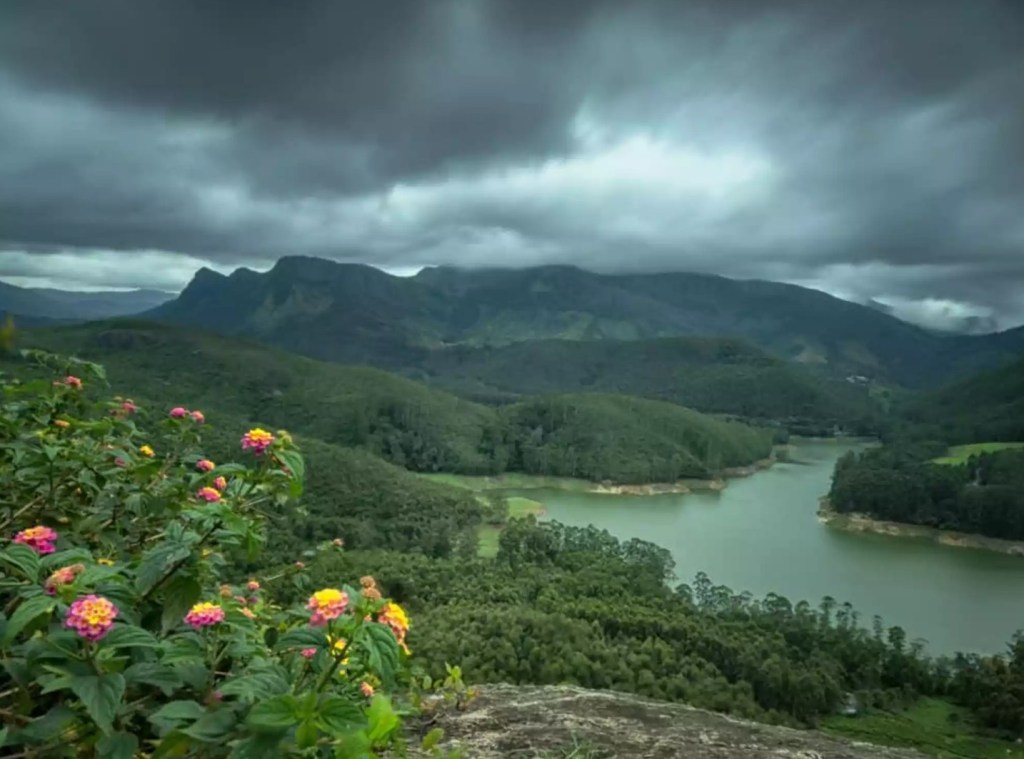
“Everybody talks about the weather, but nobody does anything about it.”—Charles Dudley Warner
Classical music composers may not do anything about the weather, but they often have been inspired by weather and other natural phenomena. This August, the Daily Classical Music Post will explore some of these works and learn about the ways that different combinations of instruments can depict storms, volcanic eruptions, and climate change.
The Scottish composer Judith Weir (born 1954) was commissioned by the Minnesota Orchestra to compose a work for their centennial celebrations; the result was the single-movement The welcome arrival of rain (2001). The piece received its premiere in 2003.
In the programme notes, Weir wrote, “This profuse and exuberant piece arose out of bare beginnings; a scale passage followed by a simple melody. Whilst I composed it, as the notes and the pages multiplied, I began to think of a comparison with the arrival of the monsoon in India, when aridity is pierced by life-giving rain; and humans, animals and vegetation revel in sudden activity and fertility. Although the monsoon is expected yearly, its arrival is always joyously surprising. The music’s title was inspired by a passage from the 18,000 verse Hindu text, Bhagavata Purana (quoted in the score).”
John Fallas wrote, “One of the stories nature has for a composer ready to listen is of abundance achieved out of austerity: shoots nurtured by the soil and transformed into leaves and flowers. This exceptionally richly scored piece, for a densely bright orchestra including triple woodwind, four trumpets and horns but no lower brass, derives all of its material from just a few simple melodic figures outlined at the beginning. The music evolves in a succession of episodes which seem each to grow out of the last, so that—like the annual Indian monsoon rains which inspired the piece’s title—its conclusion is experienced as both surprising and necessary.” Arnold Whittall wrote, “[E]choes of Tippett here—the percussion riffs of his last orchestral piece The Rose Lake—but Weir’s way of celebrating nature’s bounty is wholly her own, the varied repetitions of strong contrasts which generate the form perfectly judged.”
My classical music post for today is Judith Weir’s The welcome arrival of rain.


Leave a Reply