

Ask people what genre they think film music is—is it classical? You will get widely varying responses. For some people, film music is a subgenre of classical music; for others, it is a completely separate genre that stands on its own. This June, the Daily Classical Music Post will look at the origins of film music and discover how it has evolved.
We’ve seen this month that film score composers come from a variety of musical backgrounds. Some are classically trained, some are jazz musicians, some come from the world of popular music.
The English musician and composer Jonny Greenwood (born 1971) is perhaps best known as the lead guitarist and keyboardist of the rock band Radiohead. What many people might not know is Greenwood was classically trained, particularly in Baroque music, and his main instrument when he was growing up was the viola. He is a well-known player of the ondes Martenot (see https://dailyclassicalmusicpost.com/2023/09/05/daily-classical-music-post-126/ for a description of this early electronic instrument) and has composed works for major orchestras in the United Kingdom.
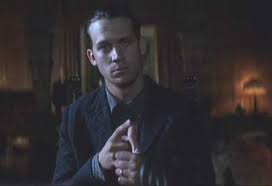
The director Paul Thomas Anderson was a fan of Radiohead and also had been impressed with Greenwood’s score, his first for a film, for Bodysong. Anderson also was impressed with one of Greenwood’s orchestral works, and he asked Greenwood to compose the score to There Will Be Blood (2007). Greenwood composed the score in three weeks. He said in an interview, “I think it was about not necessarily just making period music, which very traditionally you would do. But because they were traditional orchestral sounds, I suppose that’s what we hoped was a little unsettling, even though you know all the sounds you’re hearing are coming from very old technology. You can just do things with the classical orchestra that do unsettle you, that are sort of slightly wrong, that have some kind of undercurrent that’s slightly sinister.”
Greenwood’s cue called “Henry Plainview” is composed for string orchestra and gives each instrument its own line. Filippo Faustini wrote, “Greenwood uses a dense cluster for this cue, spanning one octave and starting from C in the uppermost violins to the same note an octave below in the cello. Every pitch in the chromatic scale is assigned individually to the single instruments, and the culmination is a shapeshifting drone.” Greenwood was a fan of the Polish composer Krzysztof Penderecki, and this is obvious in the chromaticism and microtonality in “Henry Plainview.” This use of microtonality in a film score sets Greenwood apart from most other film score composers, and the unique textures that he creates convey a sense of uneasiness that works perfectly in this film about man’s interference with nature.
My classical music post for today is Jonny Greenwood’s There Will Be Blood: “Henry Plainview.”


Leave a Reply