

Ask people what genre they think film music is—is it classical? You will get widely varying responses. For some people, film music is a subgenre of classical music; for others, it is a completely separate genre that stands on its own. This June, the Daily Classical Music Post will look at the origins of film music and discover how it has evolved.
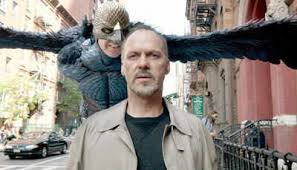
I have been wondering how to write about the score to the extremely unsettling and strange film Birdman (2014), and to say that it is one of the most unusual film scores ever hardly explains it. Jonathan Broxton wrote, “This sense of strangeness also translates into the film’s score, written and performed by Grammy-winning Mexican percussionist Antonio Sánchez. Sánchez is widely regarded to be one of the world’s premier jazz drummers. . . . While the credentials of the score are not in question, Birdman is almost impossible to review like a regular film score, because it’s not one. It wasn’t ‘composed to picture’ in the way traditional scores are composed; instead it was improvised in the moment by Sánchez as he and Iñárritu watched the film together, with Sánchez reacting to what was happening on-screen and translating these reactions into off-the-cuff drum patterns.”
Sánchez (born 1971) was trained as a classical pianist in Mexico and then studied jazz at Berklee and New England Conservatory in Massachusetts. His first foray into the world of film scoring was with Birdman. Iñárritu wanted the percussion rhythms to become “a kind of metronome inside [the main character] Riggan’s head,” and so the score is mostly solo drumming. There also are excerpts from classical works by composers including Gustav Mahler, Piotr Ilyich Tchaikovsky, Maurice Ravel, John Adams, and Sergei Rachmaninoff, which the director intended as Riggan’s hallucinations of Birdman. There are a couple of marvellous moments in the film when someone walks past a drummer actually playing the score at that time, and this unusual way of breaking the auditory fourth wall once again reminds me of that wonderful scene in Mel Brooks’ High Anxiety.
People either absolutely love Sánchez’s score or they don’t; Evan Haga is someone who loved it. He wrote, “Sanchez’s dynamics-savvy drumming, infused with swing, funk, hip-hop and Afro-Cuban elements, put you behind their steps but also inside [the characters’] heads. . . . Because Sanchez’s score shared the film with preexisting orchestral music, it was deemed ineligible for nomination. It’s an outright injustice, especially since Sanchez’s score functions in the way that the best film music does—which is to say it’s impossible to imagine the work without it. Take out the gorgeous Rachmaninoff melody that carries Michael Keaton in his flight through Manhattan and you still have Birdman; subtract the propellant force of Sanchez’s score and the movie loses its soul.”
Sánchez said in an interview, “Film scores can get so predictable and really force what you’re supposed to be feeling onto you, instead of leaving it open. The drums create an energy and a vibe without that spoon-feeding aspect of it. It created a language. . . . Nobody thinks of solo drums as being this emotional instrument, but you know it turns out they can be incredibly emotional and poignant.”
My classical music post for today is Antonio Sánchez’s Birdman: “The Anxious Battle For Sanity.”


Leave a Reply