

Olivier Messiaen: Fête des Belles Eaux
September is a month of unusual holidays, including “No Rhyme, No Reason Day,” “Wonderful Weirdos Day,” “Ceiling Fan Day,” and “Punctuation Day” (a personal favourite). To celebrate unusual holidays, this September the Daily Classical Music Post will explore music composed for unusual instruments either in ensembles or featured in a soloist capacity.
Olivier Messiaen: Fête des belles eaux (1937)
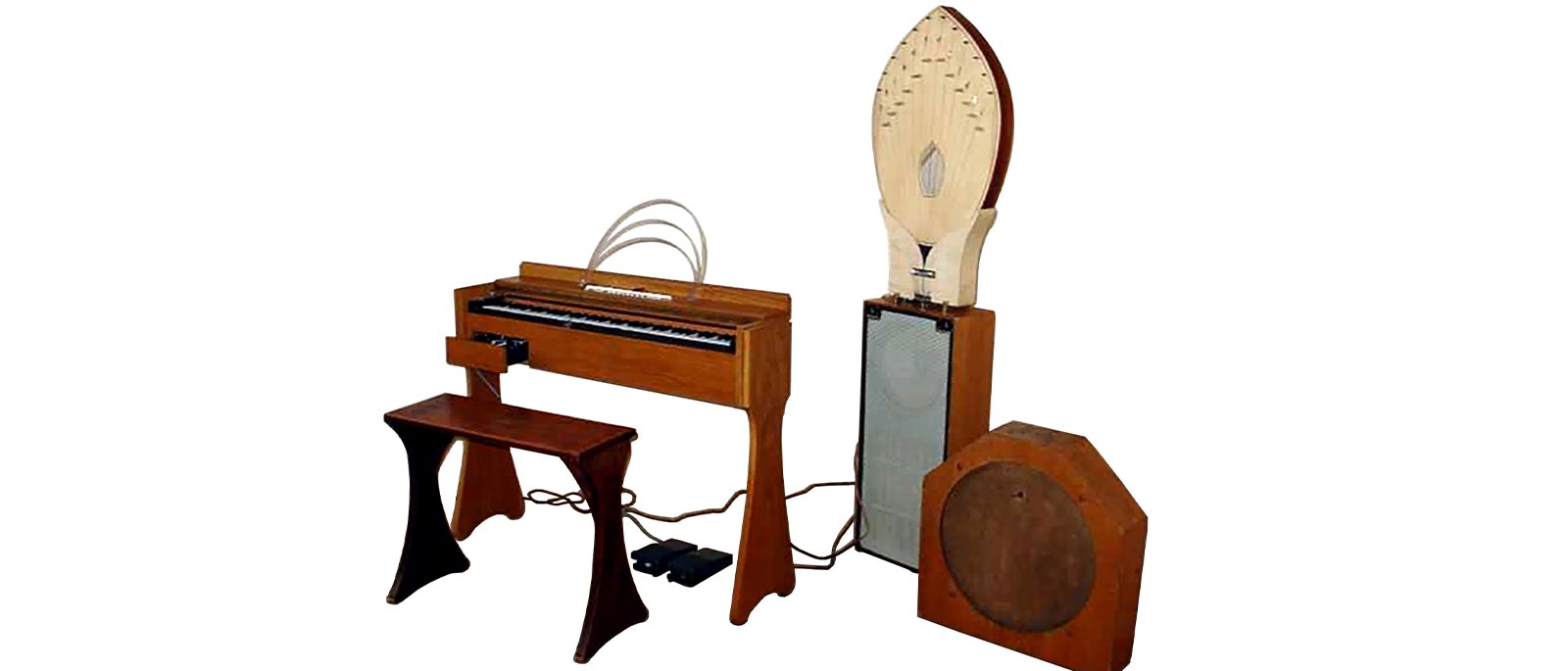
The ondes Martenot is similar to the Theremin and was invented by French inventor Maurice Martenot in 1928. Ondists play a keyboard or move a ring along a wire to create sound. It has been extremely popular in orchestral compositions as well as film and television soundtracks and in pop music.
The French composer Olivier Messaien (1908–1992) composed for the onde Martenot more than once, but it is his Fête des Belles Eaux for six ondes Martenot, commissioned for the 1937 Paris Exposition, that really shows what the instrument can do. The piece was played for the light and water shows along the Seine, and loudspeakers projected the music throughout the area.
Messiaen said, “Specialized architects brought me elaborate plans, with detailed timing indications for the various parts of the display that had been allocated to me. The form and the sounds of the work were thus absolutely dependent on the imposed divisions and timings. The music reflects the mystery of the night, the funereal aspect of the deep water, and the joyous, playful, carefree character of the fireworks. The jets of water, by contrast, seemed to me to be either fierce and terrible, or dream-like and contemplative. It is this last mood that predominates, and in the most worthwhile moments of Fêtes des belles eaux—when, on two occasions, the jets of water shoot up to a great height—a long, slow phrase is heard, almost a prayer; this turns the water into a symbol of grace and eternity . . .”
The eerie quality of the ondes Martenot probably comes across better in person, but even a recording can convey the dream-like and mysterious nature of the sound that the instrument makes. Multiply that by six, and the effect is incredibly powerful.
My classical music post for today is Olivier Messiaen’s Fête des Belles Eaux.


Leave a Reply