

Ask people what genre they think film music is—is it classical? You will get widely varying responses. For some people, film music is a subgenre of classical music; for others, it is a completely separate genre that stands on its own. This June, the Daily Classical Music Post will look at the origins of film music and discover how it has evolved.
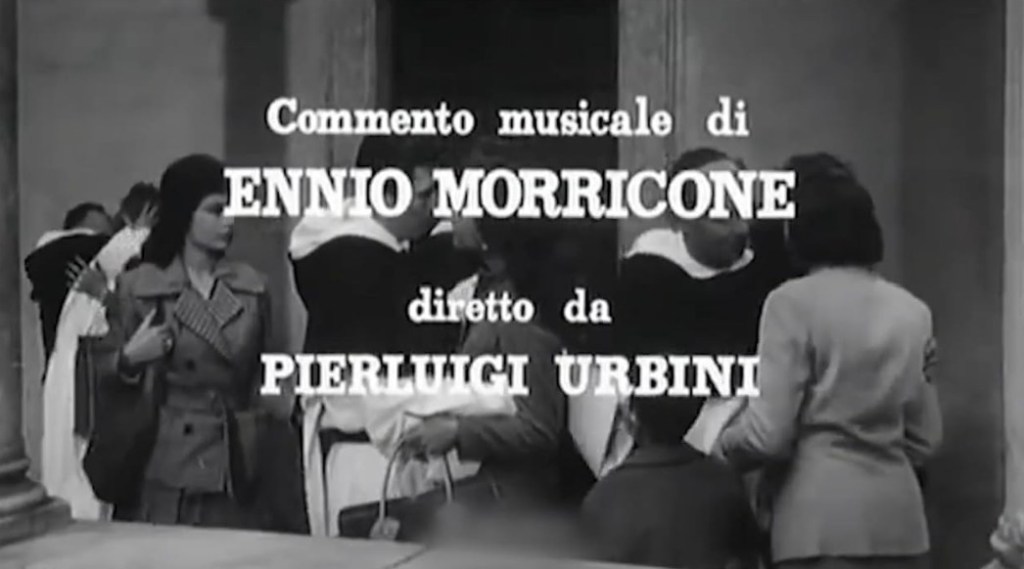
“Il federale” Main titles (From “Il federale” Original soundtrack)
The most popular genre of films from the beginning was the Western, and the period from 1940 to 1960 is often called the Golden Age of the Western. There was a shift to television Westerns in the early 1960s, but the timeless themes of justice, morality, revenge, and redemption meant that movie Westerns continued to be made, and the “spaghetti Western,” so named because most were produced by Italians, became its own distinct subgenre.
It is impossible to mention spaghetti Westerns without immediately thinking of the great Italian composer Ennio Morricone (1928–2020). Although Morricone had composed dozens of avant-garde classical works for the concert hall as well as scores for several Italian films before meeting and beginning to work with the director Sergio Leone in 1964, he will always be associated first with his scores for the spaghetti Westerns. However, his brilliance as a film composer was apparent several years before the opening music for A Fistful of Dollars (1964) was heard in the cinema.
Morricone had composed the score for a couple of Italian films before meeting the director Luciano Salce. The first film in their long association was Il Federale (The Fascist), a comedy–war drama released in 1961, and this is credited as Morricone’s true first film score. Jonathan Broxton wrote, “Il Federale was the first film for which Ennio Morricone, then aged 32, received a screen credit as a composer. It’s an Italian comedy, directed by Luciano Salce, set during World War II about a Mussolini-worshipping but somewhat impressionable and naïve fascist [who] has to arrest a prominent liberal professor . . . and bring him back to Rome for interrogation. Of course, hi-jinks ensue on the road back to Il Duce’s capital, as the older teacher slowly educates the young soldier about life, politics, and the way of the world. . . . Truthfully, the film would likely be forgotten today were it not for the fact that Morricone scored it; as far as the music is concerned, it’s a competent blend of militaristic riffs for woodwinds and snare drums, offset by a more pompous-sounding march for tubas and weighty horns, and a lively string-based scherzo.”
Il Federale’s title music is a playful piece, setting the tone perfectly with its statement of the main theme. It is also a bit silly, reflecting the anarchical comedic nature of the script. Throughout the film score, Morricone experimented with different styles, writing variations of the main theme as a bossa nova and also incorporating jazz and even some abstract, avant-garde music. He said, “I used the avant garde music when scoring films as an experiment. I wanted to experiment with going deep into the traumatic recesses of the film. And I used this music when I wanted to describe a certain kind of trauma, when the situation was very, very difficult or when something horrible had happened. . . . But after a while, let’s say that I started hearing people telling me, ‘Ennio, if you keep on writing this kind of music then “they” won’t call you anymore.’ And that’s when I had to quit with the avant garde music!” But he never gave up experimenting in one way or another, and he is quite rightly considered to be one of the greatest film score composers who ever lived.
My classical music post for today is Ennio Morricone’s Il Federale: title music.


Leave a Reply