

Ask people what genre they think film music is—is it classical? You will get widely varying responses. For some people, film music is a subgenre of classical music; for others, it is a completely separate genre that stands on its own. This June, the Daily Classical Music Post will look at the origins of film music and discover how it has evolved.
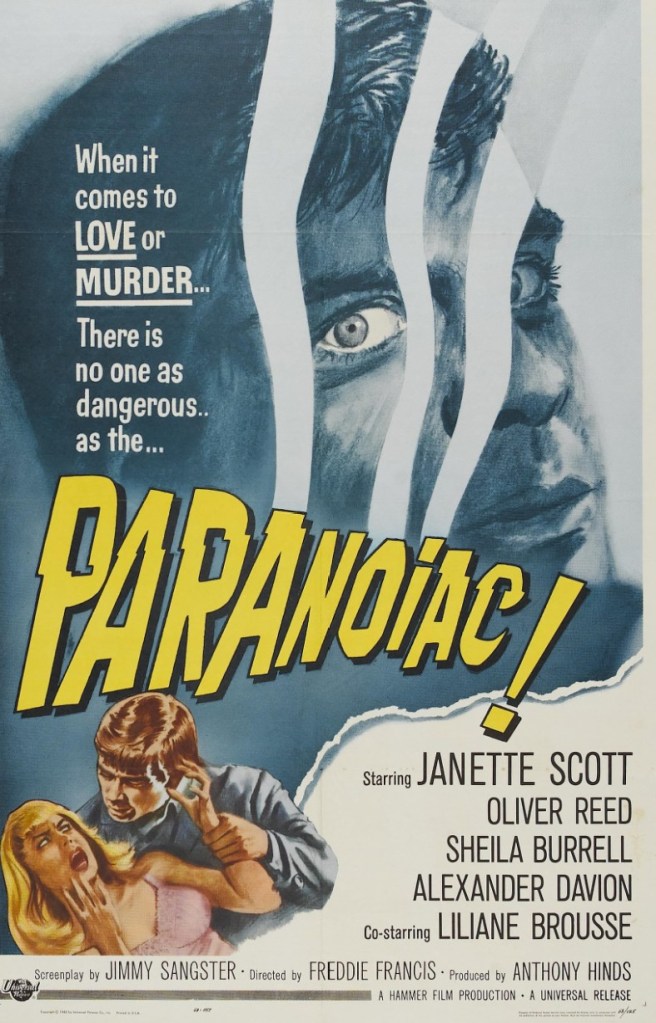
PARANOIAC (Main Title) (1962 – Hammer)
Hammer Films didn’t start off as a horror filmmaking studio. Many of the early films were comedies, and the first film made by the studio, The Public Life of Henry the Ninth (1935, now lost), was reviewed favourably as “good light entertainment.” All of that changed in 1955, when the studio’s first horror film The Quatermass Xperiment, was unexpectedly popular. Hammer Horror was formed to “cash in” on the new British film X certificate for horror films, and the gothic horror film, in all its full-colour goriness, was born.
The absolute queen of horror film composers was the English composer Elizabeth Lutyens (1906–1983). Born into an aristocratic family, Lutyens aspired to be a composer from the age of nine. She studied with John Foulds and Harold Darke, and was influenced by Arnold Schoenberg and Claude Debussy. Her interest in minimalism set her at odds with most of her contemporaries, and it didn’t help that women were for the most part excluded from classical music life. Her personal life also was a bit fraught, and when her second husband was unable to get work, she had to find a way to provide for her family.
Kimberly Lindbergs wrote, “With four children to care for, Lutyens turned her attention to radio and film. She began composing music for documentary shorts made in association with various organizations including Pathé News, British Transport, The UK Atomic Energy Authority and the BIS (British Information Service). In 1948 Lutyens became one of Britain’s first female feature-length film composers after scoring the funny and somewhat suspenseful spy yarn, Penny and the Pownall Case, featuring Christopher Lee in one of his first villainous roles as a Nazi sympathizer. In an interesting twist of fate, both Lutyens and Lee would eventually find lasting success working for Hammer Films.”
Freddie Francis, the director for the Hammer horror film Paranoiac (1963), wrote, “Elisabeth Lutyens wrote the music for Paranoiac. . . . Knowing Hammer, she was probably asked to do the picture because she was cheap but I’m delighted that she did. I showed her the film and told her my feelings about what was required. Then Hammer’s music specialist, (conductor) Philip Martell, had a chat with her and she went away and wrote a terrific score. It helped so much to create the mood I had tried to instill in the visuals.”
Lindbergs wrote, “Francis’ highly stylized approach to shooting Paranoiac allowed Lutyens’s avant-garde musical sensibilities to flourish. . . . She worked with the film’s powerful visual language to sustain suspense with silence and sound generating an organic sense of unease within the audience.” Lutyens went on to score many horror films for Hammer as well as for rival studio Amicus Productions. David Huckvale wrote, “[Although] Lutyens’s harmonic language in these popular horror films scores isn’t as radical as her serial-inspired concert works, her scores nonetheless modernized the soundtrack with both their motivic and instrumental minimalism.” Slarek wrote, “There’s something about the soundtrack of a Hammer movie, from the recognisable scores (the one [in Paranoiac] is by Elisabeth Lutyens, who two years later provided the music for Dr. Terror’s House of Horrors for Amicus) to the pacing and use of sound effects, that make them as much part of the studio identity as their more celebrated visuals.”
My classical music post for today is Elizabeth Lutyens’ Paranoiac: Main Title.


Leave a Reply