

Ask people what genre they think film music is—is it classical? You will get widely varying responses. For some people, film music is a subgenre of classical music; for others, it is a completely separate genre that stands on its own. This June, the Daily Classical Music Post will look at the origins of film music and discover how it has evolved.
Women composers have always had to fight against social and cultural obstacles that limited their opportunities. This was true in film scoring just as much as in any other genre.
Some women fought back against the barriers. One particularly successful woman was the British composer Doreen Carwithen (1922–2003). Carwithen (who later became known as Mary Alwyn after marrying the English composer William Alwyn) was the first woman to work full time as a composer for the movies. She had enjoyed success as an orchestral composer from the early 1940s and from 1946 was in constant demand in the film industry. She was known for her professionalism and ability to complete scores in record time. She composed for feature films as well as documentaries, including the official film for the coronation of Queen Elizabeth II, written in just three days.
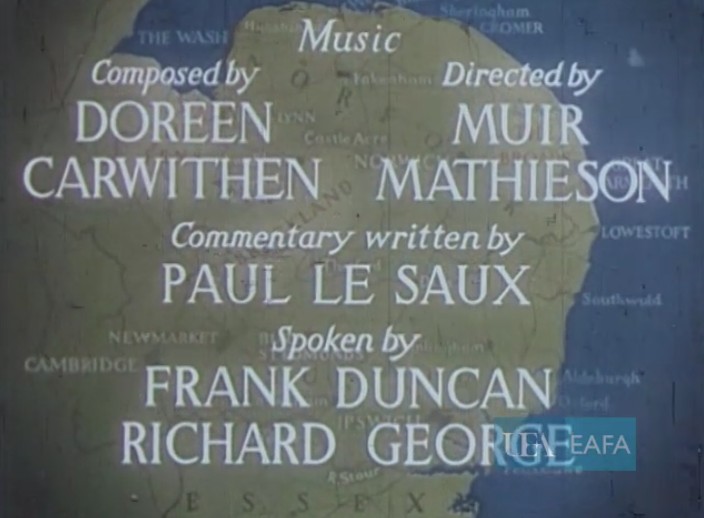
In 1954, Carwithen was commissioned to compose the score for the film East Anglian Holiday, a documentary produced by British Transport Films. Michael Brooke wrote, “One of British Transport Films’ relatively early travelogues, this guided tour of the sights of East Anglia follows a virtually identical formula to that established by the previous year’s West Country Journey. . . . Its narration . . . combines clipped patrician received pronunciation with occasional interludes delivered in a strong local accent.” John France wrote, “Doreen Carwithen has contributed a wonderfully evocative score that is a perfect accompaniment to the nostalgic details of this film. . . . Paul Snook has highlighted that this music ‘is full of incisively rustic, spirited themes in a quasi-folk style,’ which never really seem to quote a well-known tune. Listening to this music easily carries one back to a time when life was simpler, there were no wind farms, people went to Hunstanton and Great Yarmouth for their holidays and the Broads were just beginning to become a popular playground for ‘messing about in boats’.”
Carwithen later reimagined the score from East Anglian Holiday into her Suffolk Suite (1964). A reviewer of the first performance said of the work that it “is a tone poem of varied facets of Suffolk life of which . . . the most attractive was the second movement, a seascape of Orfordness, with the sun playing on the bright water and the sails filling the fitful breeze. But the whole work made joyful listening, yet not without its moments of pastoral melancholy. How well it was orchestrated, and how well the orchestra gave its inaugural performance.” Debbie Wiseman wrote, “Doreen’s legacy as a woman working in a man’s world is considerable. She paved the way for today’s female film composers.”
My classical music post for today is Doreen Carwithen’s East Anglian Holiday.


Leave a Reply