

Ask people what genre they think film music is—is it classical? You will get widely varying responses. For some people, film music is a subgenre of classical music; for others, it is a completely separate genre that stands on its own. This June, the Daily Classical Music Post will look at the origins of film music and discover how it has evolved.
It was not unusual for music from film scores to become popular outside the cinema, separate from the movie. This was particularly true for songs from musicals; for example, “White Christmas” from the 1942 film Holiday Inn, sung by Bing Crosby, reached number 5 on the US charts and number 3 on the UK charts. Crosby had another hit two years later: “Don’t Fence Me In” from Adios Argentina topped the US charts. It was unheard of, though, for purely instrumental theme music from a movie to chart, at least until 1950.
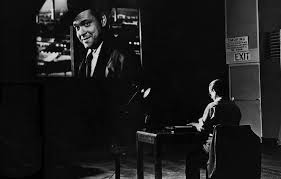
The Third Man, a British film noir, was filming in Vienna. Three of the stars—Orson Welles, Joseph Cotten, and Alida Valli—and Carol Reed, the director, decided to unwind at a wine bar after a long, hard day of filming. Anton Karas (1906–1985), an Austrian zither player and composer, was performing some of his own music at the bar, and as soon as Reed heard Karas play, he knew that this was the sound that he wanted for the soundtrack to his film. Unfortunately, Reed didn’t speak German, nor did anyone else in his party, but some customers helped translate his offer to Karas.
Karas initially turned down the offer, as he didn’t want to travel to England, where the music was to be recorded. In the end, though, he agreed. He wrote the 40-minute score in approximately six weeks after watching the film, which was translated into German so he understood what was happening on the screen. “The Third Man Theme,” also known as “The Harry Lime Theme,” was released as a single and within weeks of the film’s opening it sold more than half a million copies. The single spent 11 weeks at number on the US charts. Since the initial zither recording played by Karas, there have been dozens of versions recorded, including for guitar, brass instruments, and piano, and it has been sampled by several pop groups. There also were two vocal versions, one with lyrics by Michael Carr and Jack Golden and the other with lyrics by Walter Lord.
Craig Lysy wrote, “In terms of themes, there is just one, the Harry Lime Theme, which serves as the identity of Harry Lime, as the film is essentially focused from start to finish on him. It serves as the score’s primary theme and has gained Anton Karas immortality, taking its place in the hallowed halls of the Pantheon of great cinematic themes. It is pervasive throughout the film and emoted by a zither, displaying at once both determination and nonchalance. Its carefree cadence is infectious and the energy it provides the film’s narrative significant, yet there is also a subtle sadness to be found in the notes. . . . The theme is remarkably adaptable and functions well in a multiplicity of settings, whether they be Vienna’s grand boulevards, cafes or darker underside.”
My classical music post for today is Anton Karas’ “The Third Man Theme.”


Leave a Reply