

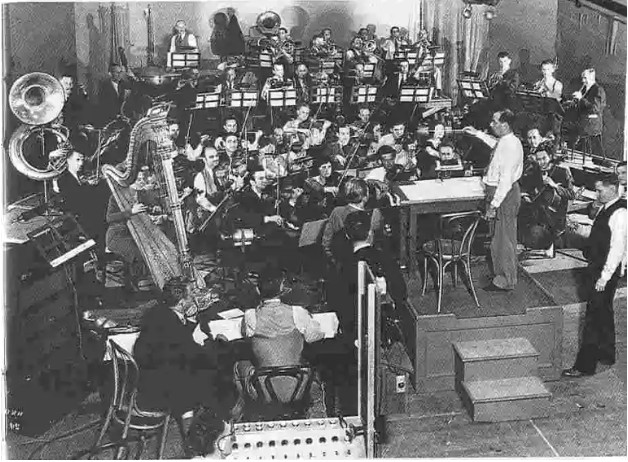
Ask people what genre they think film music is—is it classical? You will get widely varying responses. For some people, film music is a subgenre of classical music; for others, it is a completely separate genre that stands on its own. This June, the Daily Classical Music Post will look at the origins of film music and discover how it has evolved.
King Kong (1933) — The Crew and The Village
Talkies radically changed everything about films, including how music was used in storytelling. Sound was synchronized, which meant that the music could be more precisely integrated into the action, and it also had to align with dialogue. Some directors found it too difficult to adapt to this new technology—Fritz Lang stopped using music in his movies almost entirely—while others embraced the challenges.
One of the first composers to compose a synchronized score was the Austrian composer Max Steiner (1888–1971). Steiner emigrated to the United States of America in the late 1920s and moved to Hollywood in 1929. He was one of the first composers to write music for the movies; he often is called “the father of film music.” He composed over 300 film scores. His first score was for Cimarron in 1930, but his career in film music really took off when he met David O. Selznick in 1932. Steiner recalled, “David said, ‘Do you think you could put some music behind this thing?’ Music until then had not been used very much for underscoring—the producers were afraid the audience would ask ‘Where’s the music coming from?’ unless they saw an orchestra or a radio or phonograph. But with this picture [Symphony of Six Million] we proved scoring would work.”
Steiner was known for depicting things musically, and one of the best examples of this is his score for King Kong (1933). The music in the scene of the crew filming sacred rites on Skull Island is masterful. The aboriginal chief walks towards the interlopers; each step he takes is accompanied clearly in the music. This wonderful score might never have been written; the studio producing King Kong, RKO, was close to bankruptcy, and there was no money for a new score. The director was not happy with this decision, and as Steiner remembered, “Cooper said the magic words, which I quote: ‘Maxie, go ahead and score the picture . . . and don’t worry about the cost, because I will pay for the orchestra.’ And so he did, to the tune of fifty thousand dollars—an enormous sum to expend on music then; and to hear him tell it, it was worth every dime. The music meant everything to that picture, and the picture meant everything to RKO, because it saved the studio from bankruptcy.”
Michael Pratt wrote, “Being a classically and European trained musician of the late nineteenth and early twentieth centuries, Steiner fell under the influence of composer Richard Wagner (as did almost the whole of the musical world at the time). As a result he used Wagner’s leitmotiv method of composing for his film score. Steiner is often quoted as saying ‘If Wagner had lived in this century he would have been the number one film composer’.” Danny Elfman said, “I think it is important to remember that when Steiner set down to score King Kong there were almost no references. He was practically starting from a clean slate—uncharted territory. So many things that Steiner did we take for granted now that the language has been defined. Steiner really is the granddaddy of this wonderful art form.”
My classical music post for today is Max Steiner’s King Kong: The Crew and the Village.


Leave a Reply