

Ask people what genre they think film music is—is it classical? You will get widely varying responses. For some people, film music is a subgenre of classical music; for others, it is a completely separate genre that stands on its own. This June, the Daily Classical Music Post will look at the origins of film music and discover how it has evolved.
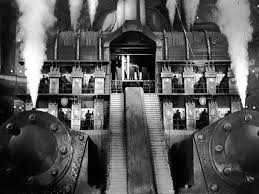
Gottfried Huppertz: Metropolis (The Moloch) (1927)
The direct predecessor of film music is incidental music, which was composed to accompany theatrical plays performed on stage. Many classical composers wrote incidental music, and much of it—for example, Felix Mendelssohn’s A Midsummer Night’s Dream and Edvard Grieg’s Peer Gynt—is regularly performed as stand-alone works on the concert stage. Leitmotifs featured prominently in incidental music, and this trend continued in film music, particularly in German cinema in the silent era.
The German composer Gottfried Huppertz (1887–1937) was an opera singer and actor as well as a composer. He met the German film director Fritz Lang in the early 1920s, and this led to several collaborations, the most famous of which was Huppertz’s film score for Lang’s silent science fiction epic Metropolis (1927). Huppertz wrote a full-scale orchestral score as well as piano reductions, which he played during rehearsals to help the actors prepare their scenes. The piano reductions were used in all performances except the premiere. The full score was not heard again until it was recorded in 2001.
Craig Lysy wrote, “Lang had enjoyed his collaboration with renowned German composer Gottfried Huppertz on three prior films and was keen to work with him again. He was attached from the earliest stage of production, and was guided by Thea’s extensive musical notes, which spotted music for various scenes. Huppertz was born of the Romantic school and so fashioned his soundscape utilizing traditional leitmotifs for characters, settings and dramatic scenes. An astounding sixteen themes were written to support the film.”
Huppertz’s themes include the Metropolis Theme, the Stadium Theme, the Eternal Garden Theme, The Worker Theme, Rotwang’s Theme, and the Dies Irae Theme. The Moloch Theme, accompanying the scene in the underground machine world, is astonishing. The orchestration includes frightening horns, basses, and drums. The Metropolis Theme is repeated as the main character moves back to the surface and travels through the city.
Bob McQuiston wrote, “The brilliant orchestration and the use of leitmotifs (a la Wagner) hold the listener’s attention, precluding the music’s need for any visual sustenance. Huppertz incorporates impressionistic, expressionistic and even jazz elements. The richness of the score undoubtedly served as an example to such European expatriate Hollywood composers as Max Steiner, Erich Wolfgang Korngold and Franz Waxman.”
My classical music post for today is Gottfried Huppertz’s Metropolis: The Moloch.


Leave a Reply