

Ask people what genre they think film music is—is it classical? You will get widely varying responses. For some people, film music is a subgenre of classical music; for others, it is a completely separate genre that stands on its own. This June, the Daily Classical Music Post will look at the origins of film music and discover how it has evolved.
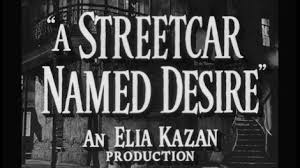
Streetcar Named Desire opening scene
In much the same way as overtures were used in opera to set the tone, film music overtures—which played while the opening credits appeared on the screen—alerted audiences to the genre, characters, and setting of what they were about to see. Overtures, also called opening music, were a feature of movies from the Golden Age (from the 1920s to the early 1960s), and often were performed as stand-alone pieces on the concert stage. Some film overtures included leitmotifs that would pop up again when the characters associated with those themes were in a scene.
The American composer Alex North (1910–1991) set the stage brilliantly with his score for the 1951 film version of Tennessee Williams’ Pulitzer Prize–winning play A Streetcar Named Desire. His overture includes elements inspired by New Orleans jazz, most of which is played by a full studio orchestra. North said, “I felt very strongly about the use of jazz. . . . I thought the play had a very sensuous . . . feeling, and to reflect that best would be by using elements of jazz. . . . I just felt that it was the right approach in keeping with the style of Tennessee Williams—the South. I couldn’t conceive of it in any other way.” North was one of the first composers to integrate his classical modernism into the typical film music leitmotif structure, and he also was one of the first to incorporate jazz into a film score.
Jonathan Rhodes Lee wrote, “[North] therefore rose to the challenge of capturing Williams’s new, richly complex attitude toward the South. The music he provided explored dual registers, representing both DuBois’s fractured, nostalgic view of her region and the rest of the characters’ seedier modern experience of inner-city New Orleans. The results proved both controversial and profoundly influential. ‘Streetcar’ went down in history as one of very few films that have been censored (in this case by the then-powerful Catholic Legion of Decency) specifically because of its soundtrack; after production was finished, North was forced to replace a lengthy cue so that the film could reach audiences around the country.”
The censored section was at the start of the staircase sequence, one of the most famous in the film. The cue (a piece of music designed to play against a scene or sequence in a film, often used to enhance the emotional or dramatic impact), was specifically singled out. Elia Kazan, the director, said in an interview, “It was explained to me that both the close shots and the music made the girl’s relation to her husband too carnal.” You can see a clip of this scene here: A Streetcar Named Desire (3/8) Movie CLIP – Stella! (1951) HD. It wasn’t until 1993 that audiences finally saw the original scene and heard the music as it was written in 1951.
My classical music post for today is Alex North’s A Streetcar Named Desire: opening music.


Leave a Reply