

The first day of May is International Workers’ Day. Workers and the labour movements are celebrated worldwide on this day. This May, the Daily Classical Music Post will honour and commemorate the struggles, achievements, rights, and gains of workers through music.
Erik Satie ~1917~ Sonatine Bureaucratique
French bureaucracy is simultaneously famous and infamous. It was established in 1789, with strict rules and regulations that were meant to encourage French civil servants to be “good republicans” and “loyal servants to the sovereign state.” Burin des Roziers wrote that in addition to providing a system of ethics for civil servants, the model gave bureaucrats a “feeling of responsibility vis-à-vis the country.” Emmanuel Martin wrote, “France is the poster child for bureaucratic democracy. Roughly one-fourth of the country’s workforce is employed in the public sector, including central and local governments, hospitals, state-owned companies and government-funded organizations. Some 56 percent of French gross domestic product (GDP) goes to public spending.”
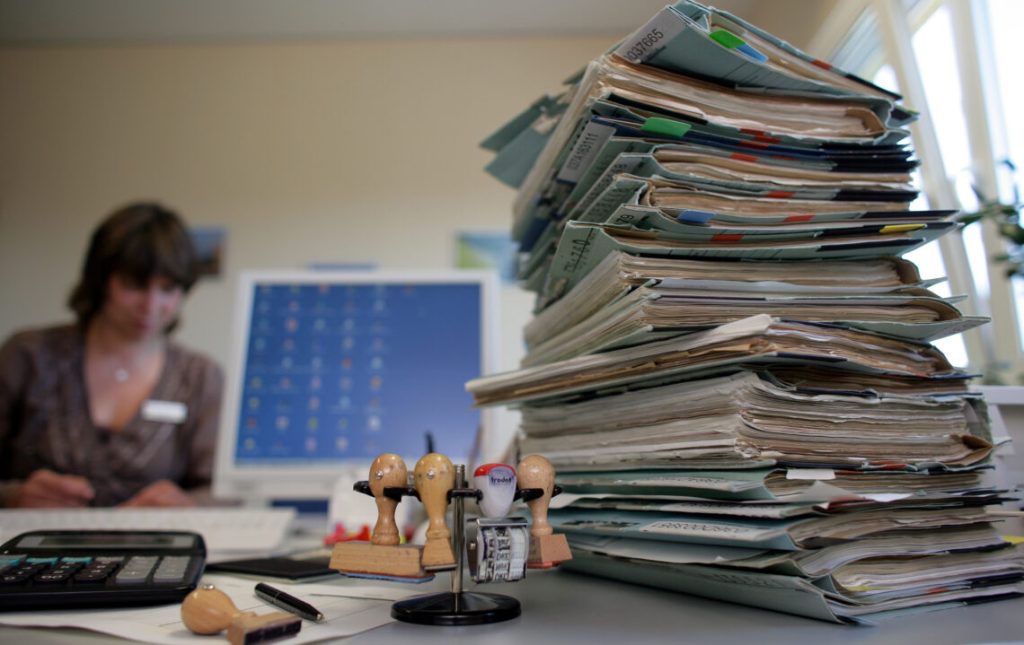
The eccentric French composer Erik Satie (1866–1925), who once wrote, “My name is Erik Satie, like everybody else,” immortalized a nameless, faceless French bureaucrat in his delightful little piano piece Sonatine Bureaucratique (1917). This piece is a parody of Muzio Clementi’s Sonatina Op. 36 No. 1. It is in an early neoclassical style (some scholars see it as a forerunner of Neoclassicism in classical music), and includes bar lines, which was unusual for him to use. Steven Moore Whiting pointed out that this composition was “the culmination and also the end of Satie’s humoristic piano music.” Scott Benzel wrote, “Sonatine Bureaucratique . . . [describes] the titular Bureaucrat’s day at the office—a day during which no actual work is accomplished. The bureaucrat enters the office, sits around, and dreams of a promotion, or an increase in pay without a promotion, or the superior flat he’s been eyeing. He listens to the playing of a nearby piano playing and leaves.”
This little story was provided by Satie in the score: “Off he sets. He makes his way merrily to the office, ‘stuffling’ as he goes. He is pleased, and wags his head. He is in love with a fair and most elegant lady, and also with his penholder, his green lustring cuffs and his Chinese skullcap. He takes long strides; rushes at the stairs and mounts them upon his back. What a wind! Once in his armchair he is happy and shows it. He reflects upon his promotion. Maybe he will have an increase without needing promotion. He hopes to move next quarter. He has a flat in view. Provided the rise or promotion comes off! More day-dreams of promotion. He hums an old Peruvian air which he collected from a deaf-mute in Lower Brittany. A nearby piano plays Clementi. How sad it is. He dares to waltz! (He, not the piano) It is all very sad. The piano resumes its work.”
My classical music post for today is Erik Satie’s Sonatine Bureaucratique.The first day of May is International Workers’ Day. Workers and the labour movements are celebrated worldwide on this day. This May, the Daily Classical Music Post will honour and commemorate the struggles, achievements, rights, and gains of workers through music.
Erik Satie ~1917~ Sonatine Bureaucratique
French bureaucracy is simultaneously famous and infamous. It was established in 1789, with strict rules and regulations that were meant to encourage French civil servants to be “good republicans” and “loyal servants to the sovereign state.” Burin des Roziers wrote that in addition to providing a system of ethics for civil servants, the model gave bureaucrats a “feeling of responsibility vis-à-vis the country.” Emmanuel Martin wrote, “France is the poster child for bureaucratic democracy. Roughly one-fourth of the country’s workforce is employed in the public sector, including central and local governments, hospitals, state-owned companies and government-funded organizations. Some 56 percent of French gross domestic product (GDP) goes to public spending.”
The eccentric French composer Erik Satie (1866–1925), who once wrote, “My name is Erik Satie, like everybody else,” immortalized a nameless, faceless French bureaucrat in his delightful little piano piece Sonatine Bureaucratique (1917). This piece is a parody of Muzio Clementi’s Sonatina Op. 36 No. 1. It is in an early neoclassical style (some scholars see it as a forerunner of Neoclassicism in classical music), and includes bar lines, which was unusual for him to use. Steven Moore Whiting pointed out that this composition was “the culmination and also the end of Satie’s humoristic piano music.” Scott Benzel wrote, “Sonatine Bureaucratique . . . [describes] the titular Bureaucrat’s day at the office—a day during which no actual work is accomplished. The bureaucrat enters the office, sits around, and dreams of a promotion, or an increase in pay without a promotion, or the superior flat he’s been eyeing. He listens to the playing of a nearby piano playing and leaves.”
This little story was provided by Satie in the score: “Off he sets. He makes his way merrily to the office, ‘stuffling’ as he goes. He is pleased, and wags his head. He is in love with a fair and most elegant lady, and also with his penholder, his green lustring cuffs and his Chinese skullcap. He takes long strides; rushes at the stairs and mounts them upon his back. What a wind! Once in his armchair he is happy and shows it. He reflects upon his promotion. Maybe he will have an increase without needing promotion. He hopes to move next quarter. He has a flat in view. Provided the rise or promotion comes off! More day-dreams of promotion. He hums an old Peruvian air which he collected from a deaf-mute in Lower Brittany. A nearby piano plays Clementi. How sad it is. He dares to waltz! (He, not the piano) It is all very sad. The piano resumes its work.”
My classical music post for today is Erik Satie’s Sonatine Bureaucratique.


Leave a Reply