

The first day of May is International Workers’ Day. Workers and the labour movements are celebrated worldwide on this day. This May, the Daily Classical Music Post will honour and commemorate the struggles, achievements, rights, and gains of workers through music.
Virgil Thomson : The Plow that Broke the Plains, Suite from the film music (1936)
The never-ending quest for profits in the U.S. West in the late 19th and early 20th centuries resulted in the exploitation of the natural resources in the Great Plains. This coupled with severe drought led to the catastrophic dust storms in the 1930s, which displaced hundreds of thousands of people. It wasn’t only agricultural workers and cattle ranchers whose livelihoods were destroyed; nearly one-third of the people who had to move due to the major economic depression were white-collar workers. The large-scale migration of people affected other parts of the United States of America, particularly in California, and the massive decline in agricultural output had economic and health impacts on the entire country.
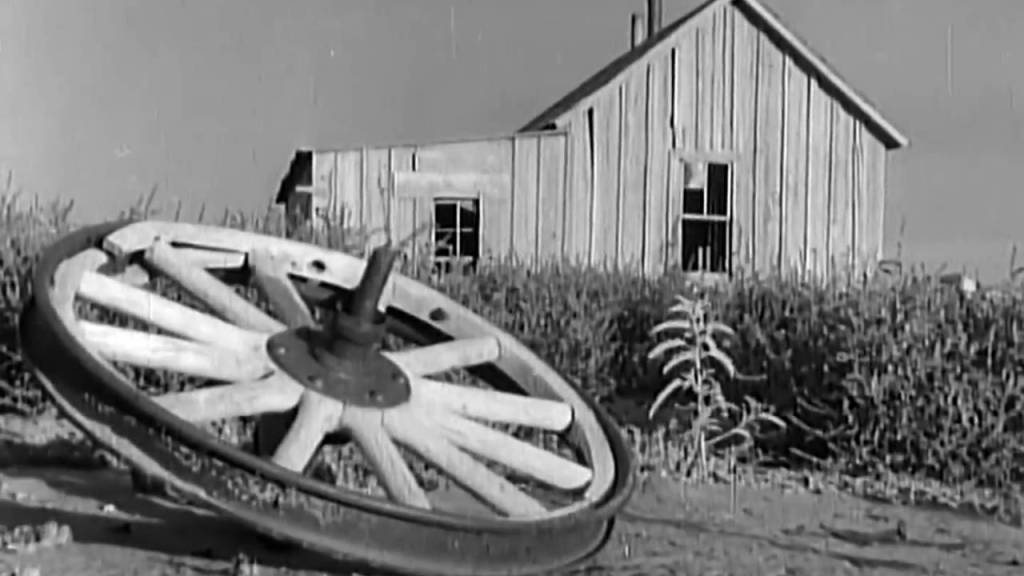
In 1936, the U.S. government asked the filmmaker Pare Lorentz to make a film explaining how the misuse of the land and greed caused the Dust Bowl crisis. Lorentz’s film, The Plow That Broke the Plains, was intended to be an educational tool, showing people how FDR’s New Deal would revitalize the grasslands in the West and restore economic health to the nation. Lorentz had a very small budget and therefore planned for The Plow That Broke the Plains to be a silent film, with music to be added later. Of the 12 composers that Lorentz interviewed, the American composer Virgil Thomson (1896–1989) was the only one who agreed to write the music for a very small fee. Lorentz recalled that all of the other composers he spoke to talked about the music; he said to Thomson, “All those high-flyers talk nothing but aesthetics. You talk about money; you’re a professional.”
Thomson watched the uncut film over and over before beginning to write down the music. He used folk and cowboy songs and religious melodies, all recognizable to 1930s audiences, in his score, which he later turned into an orchestral suite. Lorentz said, “Virgil made piano sketches of each section of the movie, and then the crew and I tried to edit it down to a preconceived time, at which point Virgil would get some ideas, genius ideas, and we would work back and forth so that you didn’t have a completed score put on top of a completed movie or vice versa.” The score was completed within two weeks, and was immediately hailed as a triumph.
Dan Morgan wrote, “Despite the biblical proportions of this tragedy Thomson eschews the epic approach in favour of something much plainer, more intimate. . . . The gentle Pastorale (Grass) certainly recalls Copland at his open-hearted best. This is a vision of Eden, of grasslands as yet unspoilt, and Thomson manages to suggest both this happy state and a sense of wide open spaces with a remarkable economy of style. Beneath the music’s often naïve charm the timps beat, portents of the destruction to come, yet for all that Thomson never allows the music to become portentous. . . . The earlier folk-like melodies resurface in Devastation but this time there is a hollow ring to the once reassuring tunes. Lorentz’s script is bleak indeed, describing the farmers and their families fleeing the dust bowls, with ‘no place to go and no place to stop’.”
My classical music post for today is Virgil Thomson’s The Plow That Broke the Plains.


Leave a Reply