

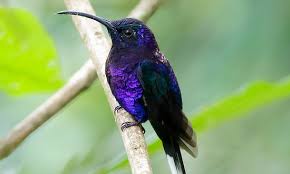
A is for April, and it’s also for Animals! This April, the Daily Classical Music Post explores music celebrating the animal kingdom.
El Colibri – Julio Sagreras / John Williams
“Listen to the hummingbird whose wings you cannot see. Listen to the hummingbird, don’t listen to me.”—Leonard Cohen
The Argentinian composer and guitarist Julio Sagreras (1879–1942) grew up in a musical household; both of his parents were guitarists. Allen Matthews said, “At the age of twelve, Sagreras began to explore other facets of music, diving into piano and composition studies. His talent was evident, and he rapidly excelled in his musical pursuits. By 1899, he had become a guitar professor at the prestigious Academia de Bellas Artes.” Sagreras composed many works for guitar, but he is perhaps best known for his series of guitar instruction books, which progress from beginning to advanced lessons in seven volumes.
El Colibri was composed in 1954. This virtuosic piece is a real crowd-pleaser. Lawrence M. Zbikowski said, “The rapid repeated notes, beginning in a low register, evoke the surprisingly visceral sound the hummingbird makes in flight; the sudden shifts along the length of the string summon the darting movements of the bird. . . . What Sagreras has given us, then, is a rather detailed sonic analog for a group of conjoined and highly dynamic processes associated with the flight of the hummingbird. . . . Sagreras’s El Colibri is a practical demonstration of how music can represent through patterned sound a phenomenon which is primarily visual: the flight of a hummingbird.”
My classical music post for today is Julio Sagreras’ El Colibri.


Leave a Reply