

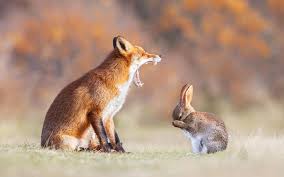
A is for April, and it’s also for Animals! This April, the Daily Classical Music Post explores music celebrating the animal kingdom.
Haren og reven (The Hare and the Fox)
“If you’re a fox, play the hare. If you’re the hare, play the fox.”—Pierce Brown
The Norwegian composer Harald Sæverud (1897–1992) composed nine symphonies as well as many works for solo piano, but he is best known for his incidental music to Henrik Ibsen’s Peer Gynt. He had a ghoulish sense of humour, and once said, “My music is terribly melancholy—wildly melancholy.” John Barbirolli said, “Whether you like Sæverud’s music or not, there is never any doubt about who has written it, and this can be said about very few composers today.” Many people consider Sæverud to be the greatest Norwegian composer since Edvard Grieg.
Sæverud’s piano pieces are lyrical and often show the influence of Norwegian folk music. He also was inspired by nature. He said, “All my music has grown out of a vague supernatural sound. As a fourteen-year-old boy I heard the invisible fluttering of owls’ wings in the summer night. This was the starting-point for all my music.”
Over a dozen manuscripts were discovered after his death, mostly of piano music. Among them was the solo piano work “Haren og reven” (The Hare and the Fox). Gwyn Parry-Jones described this lovely short work as “cunningly descriptive.” Maureen Buja said, “In Harald Sæverud’s piano work ‘The Hare and the Fox,’ we’re not sure of the outcome—the work is dashing, almost out of breath, but who’s the winner?”
My classical music post for today is Harald Sæverud’s “Haren og reven.”


Leave a Reply