

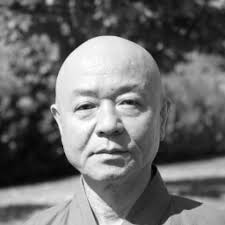
There has always been a cultural exchange between the arbitrarily divided regions labelled East and West. However, the overwhelming influence of European and U.S. art and folk music often obliterated the traditional classical music in Asia. This March, the Daily Classical Music Post explores music by Asian composers who have sought to redress the balance.
The Japanese contemporary classical composer Somei Satoh (born 1947) is known for combining Japanese court music with European romanticism. His works often contain long drawn-out chords that give the listener a chance to really listen and focus on the entire soundscape. He avoids classification but has often been called a post-minimalist composer.
Satoh said, “My music is limited to certain elements of sound and there are many calm repetitions. There is also much prolongation of a single sound. I think silence and the prolongation of sound is the same thing in terms of space. The only difference is that there is either the presence or absence of sound. More important is whether the space is ‘living’ or not. Our sense of time and space is different from that of the West. For example, in the Shinto religion, there is the term ‘imanaka’ which is not just the present moment which lies between the stretch of past eternity and future immortality, but also the manifestation of the moment of all time which is multi-layered and multi-dimensional. . . . I would like it if the listener could abandon all previous conceptions of time and experience a new sense of time presented in this music as if eternal time can be lived in a single moment.”
Margaret Leng Tan said, “Somei Satoh is a composer of the post-war generation whose hauntingly evocative musical language is a curious fusion of Japanese timbral sensibilities with 19th century Romanticism and electronic technology. He has been deeply influenced by Shintoism, the writings of the Zen Buddhist scholar DT Suzuki, his Japanese cultural heritage as well as the multimedia art forms of the sixties. Satoh’s elegant and passionate style convincingly integrates these diverse elements into an inimitably individual approach to contemporary Japanese music.”
Ian Maston said, “Japanese composer and multi-media artist Somei Satoh is known in the West primarily for his orchestral and chamber compositions. Working sometimes in a style called gendai hogaku—contemporary traditional music—Satoh’s work is often a synthesis between Japanese traditional forms and Western classical ones. His piece ‘Kisetsu’—composed for the New York Philharmonic’s ‘Messages for the Millennium’ program in 1999—(in)famously had to be restarted by the conductor three minutes into the performance because the audience noise was drowning out Satoh’s quiet, minimalist composition.” (Apparently, the title of the review in the New York Times was “On Rudeness in the Abstract and the Audience.”)
Kisetsu definitely begins quietly; don’t be fooled into turning the volume up too much, however. This often gentle piece was composed to be, as Kurt Masur put it, a “musical message for the year 2000, a universal message of hope to the people of the world.”
My classical music post for today is Somei Satoh’s Kisetsu.


Leave a Reply