

There has always been a cultural exchange between the arbitrarily divided regions labelled East and West. However, the overwhelming influence of European and U.S. art and folk music often obliterated the traditional classical music in Asia. This March, the Daily Classical Music Post explores music by Asian composers who have sought to redress the balance.
‘Hayagriva’ by Param Vir | Birmingham Contemporary Music Group
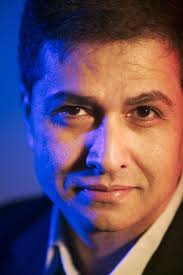
The Indian-British composer Param Vir (born 1952) grew up in a household filled with Indian classical music. He studied European composition as a secondary school student, but decided that it would be better for his long-term career to read history and philosophy at university. He became a music teacher after graduating. In his 30s, he moved to England, where he studied composition with Peter Maxwell Davies and Oliver Knussen. He has won many awards and is a leading contemporary classical composer.
Many of Vir’s compositions take as their inspiration sacred Indian themes. His 2005 work for large ensemble, Hayagriva, is a fascinating example of how he creates his soundscapes with these ideas in mind.
In the programme notes for Hayagriva, Vir said, “Hayagriva is a horse-headed being known in Indian and Tibetan sacred literature and art as an incarnation of Vishnu, associated with knowledge and wisdom. He is married to another male deity Gratu, who represents inspiration and the power of intelligence. My work draws on this image of Hayagriva and continues an exploration of beings both human and non-human associated with the inner life and self-transformation. . . . After the initial flurry of notes capped by a Tihai (rhythmic cadence appearing three times), the music settles into its first main panel (‘red’), underpinned by 19 cycles of 17 beats each, organised like a chaconne with alternating harmonic fields. . . . The horse panel leads to a bridging section, ‘green-gold’ in focus, associated with compassion. The chief musical elements are a duet for harp and celesta, laced with percussion. This slows down the tempo to the final panel of the work, ‘blue’, which is a single sonic space organised around a structural polyrhythm and a harmonic field based on fourths. The polyrhythmic background is symbolic of the deity Hayagriva’s association in traditional imagery with the eternity of space, and its spiral-like quality is represented by an exact golden section in the main rhythmic division of the panel. . . . The work has a small tailpiece: a striking 12-note figure quoted from Parade, a very early unpublished work by Sir Peter Maxwell Davies, which I have freely re-iterated for a few bars. This codetta seemed apt as my work had its beginnings in his composition studio in Sanday, Orkney, in June 2005, when I was on a visit. Max’s work highlighted the same three primary colours in different movements (Red, Green, Blue) that I have focused in my work.”
In a review of the American premiere of Hayagriva, Hedy Weiss said, “Vir, a Dehli-born composer now based in London, has conjured rhythms and colors vaguely reminiscent of Stravinsky’s ‘Rite of Spring.’ His work is a stunner, with the sounds of harp, timpani, chimes, clarinet and strings all superbly rendered here.”
My classical music post for today is Param Vir’s Hayagriva.


Leave a Reply