

There has always been a cultural exchange between the arbitrarily divided regions labelled East and West. However, the overwhelming influence of European and U.S. art and folk music often obliterated the traditional classical music in Asia. This March, the Daily Classical Music Post explores music by Asian composers who have sought to redress the balance.
Chen Yi – Ba Ban (1999) [Score-Video]
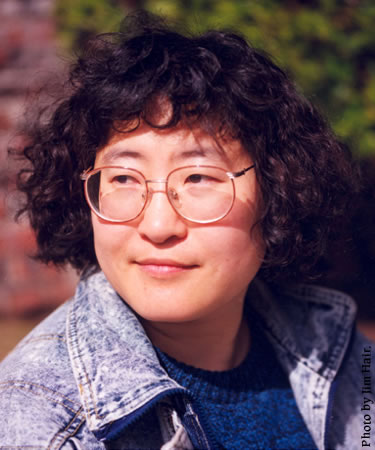
The Chinese-American composer Chen Yi (born 1953) grew up in a musical family in Guangzhou. Her parents were great fans of Western composers, and Chen learned many works by European composers in her piano and violin studies. When the Cultural Revolution began, Chen was taken to a forced-labor work camp; although she was allowed to continue to play the violin, she was only permitted to perform “revolutionary songs.”
After she was released from the camp in 1970, she returned home and was soon appointed concertmaster and composer of the Peking Opera. She went on to pursue her bachelor’s and master’s degrees (she was the first woman in China to receive a master’s in composition) at the Central Conservatory of Music, and she also began seriously studying Chinese folk music. She moved to New York in the early 1980s.
Chen has been acclaimed for her skillful combination of Western and Chinese musical traditions. She is considered by many to be the greatest living Chinese woman composer. Elizabeth de Brito said, “Renowned for her distinctive blend of Western classical with Chinese folk music, Chen Yi’s compositions represent an exquisite synthesis between two art forms from opposite sides of the world. Often using Western instruments to mimic the sound of traditional Chinese instruments, Chen Yi also frequently underpins her work with Chinese folksong, particularly the Baban theme.”
John Roeder said, “Chen Yi’s Ba Ban (1999) for solo piano, like many works of Western-trained Chinese composers, situates fragments of evocative traditional folk melody within a post-tonal discourse that is well described by transformation theory. The eponymous folk tune that it quotes is a standard of the sizhu (‘silk-and-bamboo’) repertoire. . . . [I]t presents multilinear threads of motivic transformation through virtuoso figurations typical of Western piano repertoire. The free rhythm evokes a different folk music tradition, mountain song, that Chen mentions as inspiration.” Ba Ban is a perfect illustration of why Chen has been celebrated for bridging the gap between ancient Chinese folk music and modern Western compositional styles.
My classical music post for today is Chen Yi’s Ba Ban.


Leave a Reply