

William Cosgrove famously said, “Music hath charms to soothe a savage breast.” At this pivotal moment in the world’s history, the Daily Classical Music Post explores music by composers who ran afoul of tyrants and dictators and who as a result were banned, imprisoned, or executed. We’ll also listen to some music by composers who criticized the regime under which they worked but managed to fool the ruler.
Sándor Kuti: Sonata for Solo Violin – 1. Allegro
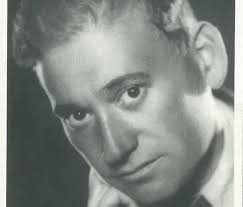
Very little is known about the Hungarian Jewish composer Sándor Kuti (1908–1945). Randall Coleman said, “According to [violinist Orsolya] Korcsolán, Kuti completed his last composition, the Sonata for Solo Violin, in 1944, while he was a prisoner at a forced labor camp. This music is excruciatingly sad and beautiful. He managed to send the manuscript with a guard to his pregnant wife, who was hiding in Budapest. She had already given birth to their daughter when she received the score. Kuti was murdered on the way to Mauthausen concentration camp. He never had a chance to meet his daughter or see his young wife again.”
In the mid-2010s, Kuti’s daughter shared the manuscripts for her father’s chamber music with Korcsolán, who recorded everything from the solo violin works to the string quartets. There is very little of his other music that is extant, just a few manuscripts. The rest is most likely lost forever. Sir Georg Solti, the celebrated conductor, was Kuti’s childhood friend and his classmate at the Franz Liszt Academy. He said, “I am convinced that had he lived, he would have become one of Hungary’s greatest composers.”
Agnes Kory wrote a biography of Kuti’s life. In it, she noted that Kuti had written his own autobiography not long before he was murdered. He listed his compositions, including chamber works for strings, an orchestral rondo, a piano suite and sonatina for piano, songs and choral works, and pieces for children. The only work not mentioned was the Sonata for Solo Violin, which he composed right before his death. Kory said, “The solo sonata was Kuti’s last work, written in the concentration camp where he perished at such a young age. He wrote it down on an ordinary piece of paper on which he drew lines.” Antal Molnár considered the three-movement Sonata for Solo Violin to be one of Kuti’s best works; he described it as “heartbreakingly expressive . . . full of love and longing.”
My classical music post for today is Sándor Kuti’s Sonata for Solo Violin, I: Allegro.


Leave a Reply