

William Cosgrove famously said, “Music hath charms to soothe a savage breast.” At this pivotal moment in the world’s history, the Daily Classical Music Post explores music by composers who ran afoul of tyrants and dictators and who as a result were banned, imprisoned, or executed. We’ll also listen to some music by composers who criticized the regime under which they worked but managed to fool the ruler.
Rudolf Karel – Nonett (Fl, Oboe, Klar, Fagott, Horn, Vln, Vla, Cello & Kontrabaß)
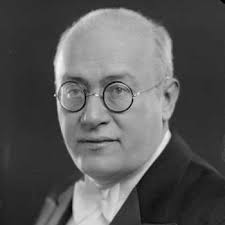
The Czech composer Rudolf Karel (1880–1945) studied composition with Antonín Dvořák. He conducted the orchestra of the Czechoslovak Legion in the period between the two world wars. He also was a professor at Prague Conservatory. His catalogue includes works for orchestra, piano, opera, and chamber music. His early works are in a late Romantic style, but the compositions dating from 1920 on are based on folk music and fiddle tunes and are in a more classical style. Although Karel’s music was neglected in the years following the end of World War II, there have been efforts to publish and record his compositions in recent years.
Karel was a member of the Czech resistance during World War II and was arrested and imprisoned in 1943. He was first sent to Pankrác and then to Theresienstadt. Not long after he arrived at Theresienstadt, he contracted dysentery and pneumonia. He was sent outside his barracks in freezing cold weather along with the other inhabitants when the commandant decided to try to disinfect the building. Karel and several other prisoners died as a result.
Ryan Hugh Ross said, “Rudolf Karel continued to compose impressive works using only fragments of charcoal and toilet paper during his arrest and imprisonment. . . . Several works from this period survive thanks to the prison warden, František Müller, who smuggled the fragments out of the prison with his daughter’s notes.” (Someone reported Müller after this, and he was arrested.) One of the works to survive from Karel’s time in Pankrác was his Nonet (1945), for flute, oboe, clarinet, bassoon, horn, violin, viola, cello, and bass. This three-movement chamber work, described by Jan Charypar as “a valuable contribution to Czech neo-classicism,” was sketched on hundreds of bits of toilet paper, and the members of the Czech Nonet, to whom the piece was dedicated, reconstructed and orchestrated it after the war. It is one of Karel’s most popular works.
My classical music post for today is Rudolf Karel’s Nonet.


Leave a Reply