

William Cosgrove famously said, “Music hath charms to soothe a savage breast.” At this pivotal moment in the world’s history, the Daily Classical Music Post explored music by composers who ran afoul of tyrants and dictators and who as a result were banned, imprisoned, or executed. We also listened to some music by composers who criticized the regime under which they worked but managed to fool the ruler.
Hans Krása – Brundibár – dětská opera o dvou dějstvích (Terezín, 1943), MFSH 2018
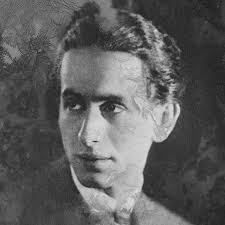
The Czech composer Hans Krása (1899–1944) was mainly influenced by Alexander von Zemlinsky, Gustav Mahler, and Arnold Schoenberg, although he also admired the music of Les Six and travelled several times to France to study with Albert Roussel. He lived and worked in Prague until he was arrested by the Nazis in 1942. He wrote in a programme note in 1930, “I am sufficiently daring, as a modern composer, to write melodic music. This reflects my whole attitude to music, whether it is called modern or anything else. My music is strictly founded on the concept of accessible melodic character.”
The website holocaustmusic.ort.org said, “The fact that Krása led a rather Bohemian lifestyle, thereby missing opportunities of writing more works, is countered by the quality of those pieces that have been preserved. Indeed, had Krása died before the onset of the Second World War, his name would merit recognition as that of an artist who enriched the music of our era with a number of fresh, original and significant compositions.” Survivors of Theresienstadt reported that Krása was a major contributor to musical life there, and he composed many works during his incarceration, most of which are now lost. However, his compositions from the 1920s and 1930s have been rediscovered in recent years, including song cycles, orchestral music, chamber music, choral music, and an opera, Verlobung in Traum (Betrothed in a Dream, based on a story by Fyodor Dostoevsky).
The last work that Krása completed before his arrest and deportation to Theresienstadt was Brundibár (1938–1943). Thomas D. Svatos said, “Krása’s two-act children’s opera Brundibár [The Bumble–Bee], a setting of an Adolf Hoffmeister libretto, was composed in 1938 as a submission to a children’s opera competition sponsored by the Czechoslovak Ministry of Education. But no winner was announced nor any prize money awarded, undoubtedly due to the complete occupation of the country by Nazi Germany in March, 1939. In July 1941, rehearsals of the opera began under the conductor Rafael Schächter at Prague’s Jewish-Zionist orphanage HaGibor. The opera was performed twice in secret, as Jewish cultural activities were already forbidden by that time. Krása was arrested before hearing the work and deported to Terezín one year later. Several of his collaborators and the child actors involved in the HaGibor production followed shortly thereafter.”
While he was in the camp, he reworked the opera to take account of the available cast and instrumentalists. Brundibár was performed there more than 50 times, and excerpts from the production appeared in the propaganda film Der Führer schenkt den Juden eine Stadt (The Fuhrer Gives the Jews a City; I wrote about this film earlier this month in the post on Pavel Haas). After the film was released, Krása, the children who performed in the opera, and several other musicians active in the camp were transported to Auschwitz, where they were murdered on arrival. (A clip of the production shown in the film can be seen here: Brundibár clip from Terezín; only one child from this performance survived the war.)
Brundibár is about a fatherless brother and sister whose mother is very ill; only milk will make her well, but they have no money to buy it. The children have noticed that the organ grinder, Brundibár, earns money for singing in the local marketplace, so they decide to sing there as well. However, Brundibár, who is actually quite evil, chases them away. A group of animals and local children come to their aid, and after Brundibár is himself chased away, the brother and sister return to the marketplace to sing. Although it was never explicit, the character of Brundibár was seen as a representation of Hitler. The happy ending would have given the children who performed the opera some measure of hope for a better future. The final lines are “Brundibár is beaten, he runs into the distance, strike up the drum, the war has been won.”
My classical music post for today is Hans Krása’s Brundibár.
************************
A note: The more I worked on this month’s posts, the more depressed I got about what was lost to the world because of hate, prejudice, and dictatorships. But some time around 22 January or so, it all of a sudden occurred to me that we are so lucky to have the music that we do have. Some of these composers wrote music even in the midst of absolute horror and facing imminent death, and what they or someone else saved is among the most beautiful, poignant, and emotional music I have heard.
So, is there a lesson that we can learn from the people who against all the odds continued to produce music because it was what kept them going? I think there is. Even when it seems that there is nothing that you can do, keep going, keep fighting, keep trying. You may not be around to enjoy the results of your endeavours, but you will make a difference.


Leave a Reply