

William Cosgrove famously said, “Music hath charms to soothe a savage breast.” At this pivotal moment in the world’s history, the Daily Classical Music Post explores music by composers who ran afoul of tyrants and dictators and who as a result were banned, imprisoned, or executed. We’ll also listen to some music by composers who criticized the regime under which they worked but managed to fool the ruler.
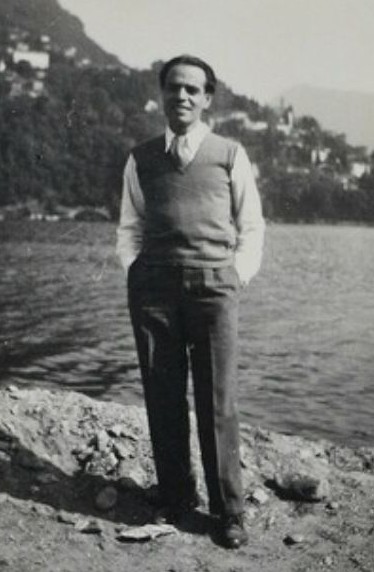
The Austrian composer Kurt Sonnenfeld (1921–1997) was one of the many Austrian Jews who moved to Italy around the time of the Anschluss because it seemed a more hospitable place. Jesse Rosenberg said in a review of the book Let Our Music Be Played: Italian Jewish Musicians and Composers under Fascism, “Raffaele Deluca’s contribution to the volume presents original research on one particularly ill-timed arrival in Italy: that of the Viennese musician Kurt Sonnenfeld in 1939, then in his late teens, within a year of the Anschluss. In less than two years Sonnenfeld found himself confined to the internment camp of Ferramonti, in Calabria, a camp occupied by foreign nationals.” Sonnenfeld was actually intending to go from Italy to the United States to live with an uncle, but he was arrested before he could leave.
Ferramonti was one of the camps that had a somewhat more relaxed policy regarding the performance of music, and even given the harsh life there, Sonnenfeld was able to continue to compose: he wrote at least 100 works while he was imprisoned. However, after the war, when he returned to Milan, his application to study at the conservatory there was rejected because he was too old. It didn’t matter that he spent all of those years locked up in a concentration camp; the committee members who turned him down included some who had been members of the Italian fascist party, and they still had a lot of control. Sonnenfeld decided nonetheless to stay in Italy, as there was nothing for him in Austria (his parents and other members of his family had been murdered by the Nazis). He did continue to compose (he wrote over 300 works in his lifetime), and he made a living by teaching music at the Jewish School of Milan.
His lovely and gentle Notturno was written in 1951. I was not able to find recordings of other works by Sonnenfeld. Universal Edition is currently supporting a project to preserve compositions by three Jewish composers who were imprisoned in Ferramonti: Isko Thaler, Leon Levitch, and Sonnenfeld. Astrid Koblanck said, “The careers of many composers were cruelly interrupted during the Second World War. Many died and those who survived the camps were often never able to return to what had been before. It is deeply important to us at Universal Edition to finally bring their music to life after so many years and to give these artists the respect they deserve posthumously.”
My classical music post for today is Kurt Sonnenfeld’s Notturno.


Leave a Reply