

William Cosgrove famously said, “Music hath charms to soothe a savage breast.” At this pivotal moment in the world’s history, the Daily Classical Music Post explores music by composers who ran afoul of tyrants and dictators and who as a result were banned, imprisoned, or executed. We’ll also listen to some music by composers who criticized the regime under which they worked but managed to fool the ruler.
Cantata para America magica , Op. 27: IV. Interludio fantastico
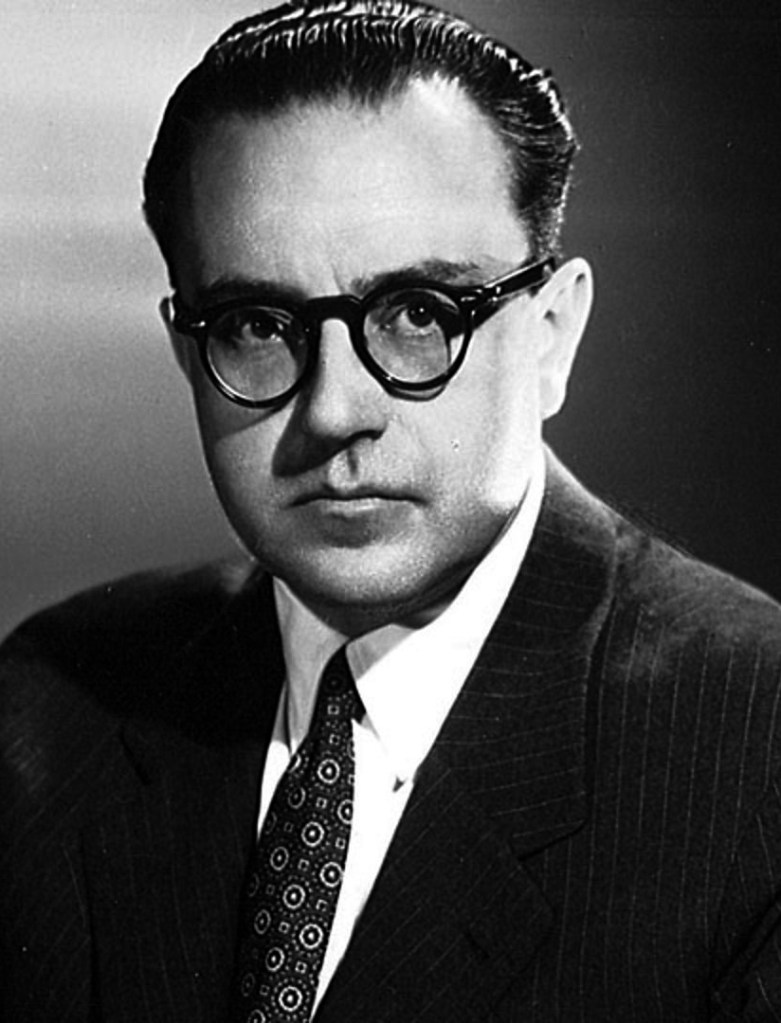
The Argentine composer Alberto Ginastera (1916–1983) was one of the most important classical composers of the Americas in the 20th century. He divided his music into three distinct periods: “Objective Nationalism,” “Subjective Nationalism,” and “Neo-Expressionism.” It was during the first of these that his use of Argentine folk music is most obvious. The compositions in his later years still incorporated Argentine folk music and themes but in a much more abstract way.
Ginastera studied composition with Aaron Copland at Tanglewood in the mid-1940s. Debra Lew Harder said that after this, Ginastera “returned to Argentina with high hopes to make his country a place for serious musical study. However, struggling against the repressive dictatorship of Juan Perón, he became disillusioned not only with Argentina, but with the label ‘Latin composer.’ By the early ’60s, he began to write in an atonal, modernist style that obliterated his Latin identity, and earned him critical praise. He left Argentina for good in 1971.”
Chris Vaneman said, “Alberto Ginastera might well have been a supporting character whose part in Evita didn’t quite make the final cut. But Ginastera was still the most important figure in Argentina’s musical world through the middle of the 20th Century, a politically engaged cultural leader who stood up bravely for democracy and artistic freedom, and a composer of colorful and engaging music of great virtuosity and appeal.” Ginastera’s opposition to Perón extended to his refusal to name the conservatory that he founded after Eva Perón. As a result, he was removed from his position.
Cantata para América mágica was written in 1960 for dramatic soprano and 53 percussion instruments. This was one of Ginastera’s first 12-tone works. It received its premiere in Washington, DC, in 1961 at the Second InterAmerican Music Festival. The Cantata is a large work that mixes elements of folk music—including indigenous instruments and poetry inspired by ancient pre-Columbian legends written by Ginastera’s first wife, Mercedes de Toro—with retrograde formations and other thematic devices typical of the Second Viennese School. Programme notes from a performance at the Hollywood Bowl said, “The six movements of the work trace a narrative arc from invocation and romance to battle, defeat, and apocalyptic prophecy. The hinge is the fourth movement, the purely instrumental ‘Interludio fantástico.’ It is a fleet, shimmering toccata that gradually adds instruments (but within a constant pianissimo range) until reaching a climax on a tremolo, 12-note chord, and then it recedes in reverse order.”
My classical music post for today is Alberto Ginastera’s Cantata para América mágica, Op. 27: IV. Interludio fantástico.


Leave a Reply