

William Cosgrove famously said, “Music hath charms to soothe a savage breast.” At this pivotal moment in the world’s history, the Daily Classical Music Post explores music by composers who ran afoul of tyrants and dictators and who as a result were banned, imprisoned, or executed. We’ll also listen to some music by composers who criticized the regime under which they worked but managed to fool the ruler.
Zaderatsky – 24 Preludes and Fugues (Nemtsov, 2015) COMPLETE [HQ]
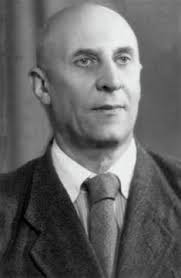
The Ukrainian composer Vsevolod Zaderatsky (1891–1953) studied music in Moscow and was known throughout Russia as a composer and pianist. He was able to continue after the Bolshevik Revolution, but in 1926 his monarchist sympathies and membership in the White movement led to his arrest and imprisonment. This was the first of two times that he was sent to the gulag. Everything that he had composed to this point was destroyed. None of Zaderatsky’s music was published or performed in his lifetime. Even during the period from 1929 to 1934, when the authorities allowed him to live in Moscow, his music was banned.
Jascha Nemtsov said, “Magadan—for Russians the name of this port in north-eastern Siberia has a special resonance. For decades this town was the administrative centre of the regional Gulag, the so-called ‘Sevvostlag’ (North East Camps) in one of the most inhospitable regions of Russia. Magadan also served as a transit camp for countless slave labourers during the Stalin era. . . . Only a very few ever returned to the town from the Kolyma valley camps. In August 1939, when the short polar summer was already drawing to a close, there appeared in Magadan a man whose emaciated body and ragged clothing immediately marked him out as a former prisoner. In his pocket he had a document that officially certified his right to life: ‘This is to certify that Citizen Zaderatsky Vsevolod Petrovich was held from 17 July 1937 to 21 July 1939 in a camp in the Sevvostlag of the Commissariat for Internal Affairs, and has been released because his case has been closed.’ The photograph on the certificate showed the haggard face of the 47-year-old, already looking like an old man.”
While he was in the camp, Zaderatsky found bits of paper and pencil stubs, and he wrote music when he was able. These compositions, his 24 Preludes and Fugues for piano, were written in every key. He wrote these amazing pieces without any proper materials or access to a piano or any other instrument. It is a remarkable feat, one that very well may have been the first of its kind in the 20th century. Rebecca Schmid said, “[T]he works reveal a melodic invention and mastery of form that establish Zaderatsky as a major voice in 20th-century piano music.”
My classical music post for today is Vsevolod Zaderatsky’s 24 Preludes and Fugues.


Leave a Reply