

William Cosgrove famously said, “Music hath charms to soothe a savage breast.” At this pivotal moment in the world’s history, the Daily Classical Music Post explores music by composers who ran afoul of tyrants and dictators and who as a result were banned, imprisoned, or executed. We’ll also listen to some music by composers who criticized the regime under which they worked but managed to fool the ruler.
Alfredo Casella: Missa Solemnis Pro Pace, Op 71 (1944)
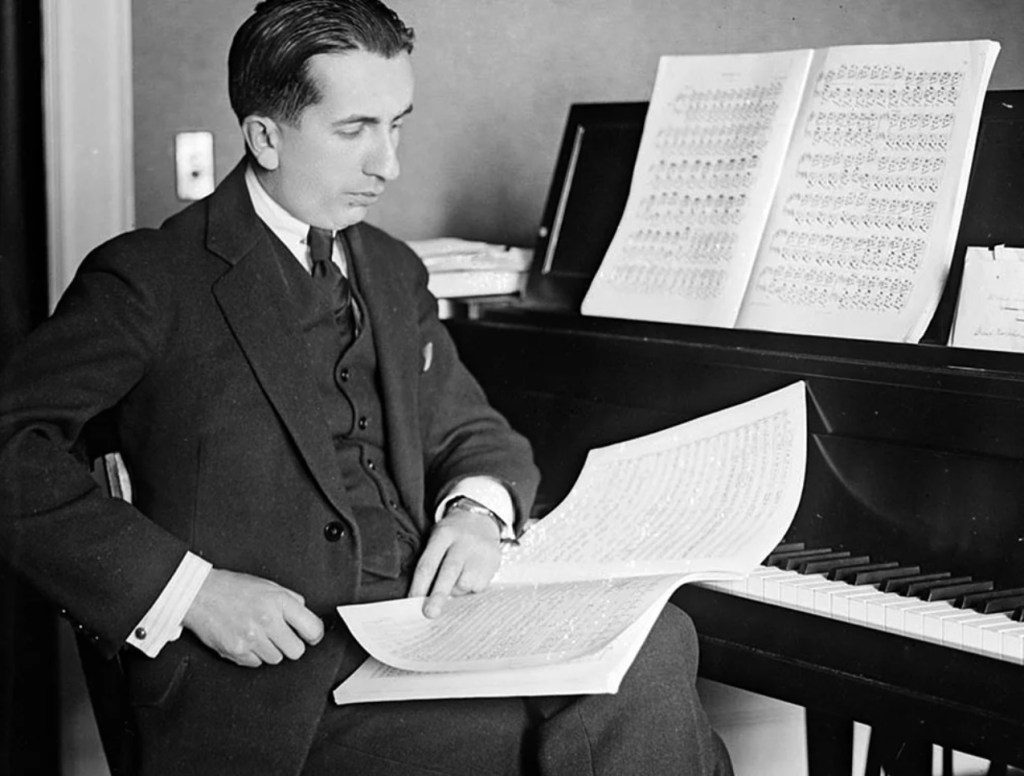
The Italian composer Alfredo Casella (1883–1947) is credited with reviving Antonio Vivaldi’s music. Casella’s interest in Vivaldi and other Baroque musicians had a major effect on his own compositions. He studied composition in France with Gabriel Fauré, and his fellow students included George Enescu and Maurice Ravel. Casella, like some of his contemporaries, concentrated more on orchestral music rather than opera. He was at the forefront of the Neoclassical movement in Italian music. He also was a conductor, and from 1927 to 1929 was the musical director of the Boston Pops.
Before World War II, Casella was very much in favour with the fascist regime. He composed a work in 1937 to celebrate the Italian invasion of Ethiopia, and was a supporter of the fascists, perhaps partly because he believed the lies that Mussolini told in the early years regarding racial equality and harmony. Harvey Sachs said, “But the ‘soft’ persecution of Italian Jews was transformed into something much worse in the fall of 1943, when the Germans occupied the northern half of the country. . . . In Rome, Alfredo Casella . . . one of the best-known Italian composers of his generation, lived in constant fear of being torn from his Franco-Jewish wife and their daughter, who were subject to arrest and deportation. One evening, having been tipped off about a raid on their flat, the family split up and hid in the homes of friends, not to reassemble until the ‘Jew hunt’ had ended.”
Although he had contributed so much to Italian musical life and his works had been so popular during his lifetime, after the war his reputation suffered and his works were for the most part ignored. Many of his works are only now being rediscovered and his position in Italian music in the first half of the 20th century is being restored.
Casella’s final composition was his Missa Solemnis Pro Pace, written in 1944. Bradford Robinson said, “Casella was an artist of wide-ranging interests and emotional attachments, and though his compositional oeuvre is sometimes claimed to lack a personal voice, the brilliance of his conceptions or the finesse of his workmanship have never been questioned. The Missa solemnis, his last and perhaps his greatest work, was written at the end of a long career in which he had traversed several styles and ‘manners’ while always managing to remain at the forefront of his times. The work was begun on 4 July 1944, the day the Allied forces entered Rome, and represents the composer’s dual response to the horrors of the Second World War and the wasting illness from which he had been suffering since the early 1940s.” One critic writing about the German premiere of the Missa Solemnis said, “Like Verdi’s Requiem, the work bursts its liturgical bounds with its rich colors and theatrical gestures to produce a reading that can only be considered momentous.”
My classical music post for today is Alfredo Casella’s Missa Solemnis Pro Pace.


Leave a Reply