

William Cosgrove famously said, “Music hath charms to soothe a savage breast.” At this pivotal moment in the world’s history, the Daily Classical Music Post explores music by composers who ran afoul of tyrants and dictators and who as a result were banned, imprisoned, or executed. We’ll also listen to some music by composers who criticized the regime under which they worked but managed to fool the ruler.
Gideon Klein – Streichtrio | WDR Sinfonieorchester
There are many times this month that I have cried while researching and writing this month’s DCMP, but today I had to stop writing for a while after reading this paragraph on today’s composer by Michael Haas: “The title of this book [Don’t Forget About Me], published by Toccata Press, comes from Gideon Klein’s last letter, written to his sister Edith’s mother-in-law, Marie Doláková. The letter was smuggled out from the Auschwitz subcamp Fürstengrube, a coalmine owned by IG Farbenindustrie AG and a camp few survived. In the letter, which managed to escape the camp censor, Gideon Klein asked three times ‘not to be forgotten’. How Klein died remains a mystery: either he was shot as the camp was evacuated with the approach of the Soviet troops, or more horrifyingly, he was burned to death when the Nazis set fire to the camp buildings regardless of those too ill or too weak to leave.”
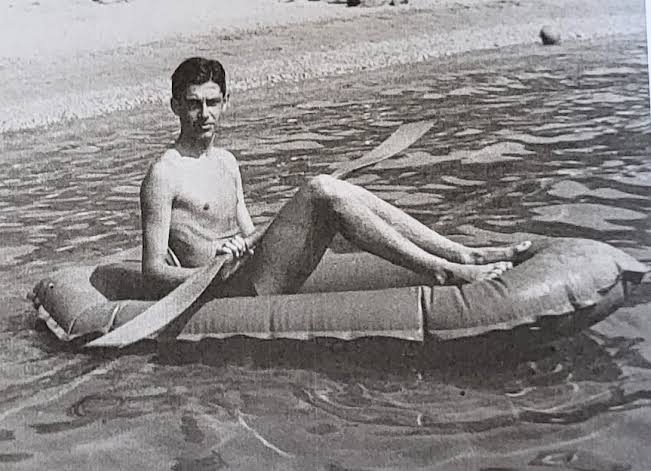
The Czechoslovakian composer and pianist Gideon Klein (1919–1945) was a supremely talented and intelligent person and someone beloved by all who knew him (he also was described as “looking like a movie star,” which probably helped). He showed incredible musical promise from a very young age, and was studying piano and composition at university in 1940 when the Nazis shut down all higher education institutions in Czechoslovakia following the occupation. Jewish musicians were banned from performing, but Klein managed to continue to perform for a short time using the pseudonym Karel Vránek. He also continued to compose, and carried on doing so even after he was deported to Theresienstadt in 1941.
He joined other Jewish composers in the camp, including Pavel Haas, Hans Krása, and Viktor Ullmann, in composing and performing in secret, and he only stopped when in 1944 he was deported to Auschwitz. Before he left, he gave his girlfriend in Theresienstadt all of his manuscripts (including the Trio for Violin, Viola, and Cello, composed not long before he was sent to Auschwitz), in the hopes that she would survive and could get them to any members of his family who were still alive. He knew that he was being sent to his death.
Most scholars agree that Klein showed his real genius in the works composed during his time in Theresienstadt. Ullmann said in Goethe und Ghetto: “Theresienstadt was and continues to be for me the school of form. . . . It’s only worth emphasising how much my work as a musician has gained by being in Theresienstadt: in no manner did we just sit on the banks of the rivers of Babylon and weep that our cultural needs were not able to keep pace with our will to live.” Klein no doubt felt the same way.
Haas again: “His piano sonata may suggest clear Alban Berg influences, and his string trio offers echoes of Janáček but in these and other works composed in the Ghetto of Terezín, Klein’s own voice is dominant. As Fligg points out, the trio is now standard repertoire and performed in concerts that do not take the Holocaust or Terezín as its subject. There is painfully little that remains, but what remains is more than just the promise of a young talent cut short.”
My classical music post for today is Gideon Klein’s Trio for Violin, Viola, and Cello.


Leave a Reply