

William Cosgrove famously said, “Music hath charms to soothe a savage breast.” At this pivotal moment in the world’s history, the Daily Classical Music Post explores music by composers who ran afoul of tyrants and dictators and who as a result were banned, imprisoned, or executed. We’ll also listen to some music by composers who criticized the regime under which they worked but managed to fool the ruler.
Danza piemontese, Op. 31: I. Andantino mosso
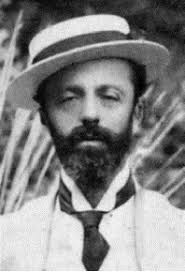
The Italian composer Leone Sinigaglia (1868–1944) was born into an upper-class Jewish family in Turin. In addition to his interest in music, he was a keen mountaineer (he was known as “the first great Italian climber in the Dolomites”), and he often climbed to remote villages to hear traditional folk songs. He transcribed dozens of these songs and published them in collections for voice or violin and piano. He is mainly remembered for these songs, although his output was varied and included works for orchestra as well as chamber music.
Nicole Restle said, “Sinigaglia found his personal style at the suggestion of Dvořák, who advised the composer to integrate the folk melodies of his Piedmontese homeland into symphonic works. From then on, he collected the folk melodies of Piedmont and wrote a number of compositions, including the Rapsodia piemontese for violin and orchestra and the Danze piemontesi, which are based on traditional tunes. Although many critics accused Sinigaglia of ‘introducing tavern songs into the concert hall’, he was well received by audiences.”
The fascist dictator Benito Mussolini said in 1920, “In Italy there is absolutely no differentiation between Jews and non-Jews, in all fields, from religion to politics to the military to the economy. . . . Italian Jews have their new Zion here, in this adorable land of ours.” However, when his fascist government assumed power in the 1920s, slowly but surely life began to change for Italian Jews. Some musicians, like Sinigaglia, continued to occupy positions of authority in conservatories and opera houses, but by the end of 1933 a ban on radio broadcasts of pieces by Jewish composers was enacted. And in 1938 new laws stated that anyone “belonging to the Hebrew race” was to be expelled from all public positions in Italy. Jewish performers and works by Jewish composers were banned from concert halls.
Mussolini was deposed in July 1943. Gregorio Nardi said, “Although the situation in the south of Italy, which was already in American hands, was quickly regularized, in the north the German and Italian SS were fanatically committed to persecuting all remaining Jews. The aged Sinigaglia was among the victims: he had thought that his advanced age had made it unnecessary for him to abandon Turin. Taken to the Mauriziano Hospital, he died of cardiac-respiratory arrest when a fascist platoon prepared to arrest him.”
My classical music post for today is Leone Sinigaglia’s Danze piemontese, Op. 31: I. Andantino mosso.


Leave a Reply