

William Cosgrove famously said, “Music hath charms to soothe a savage breast.” At this pivotal moment in the world’s history, the Daily Classical Music Post explores music by composers who ran afoul of tyrants and dictators and who as a result were banned, imprisoned, or executed. We’ll also listen to some music by composers who criticized the regime under which they worked but managed to fool the ruler.
Kaddisch (Poem op. 6 fuer Oboe und Klavier)
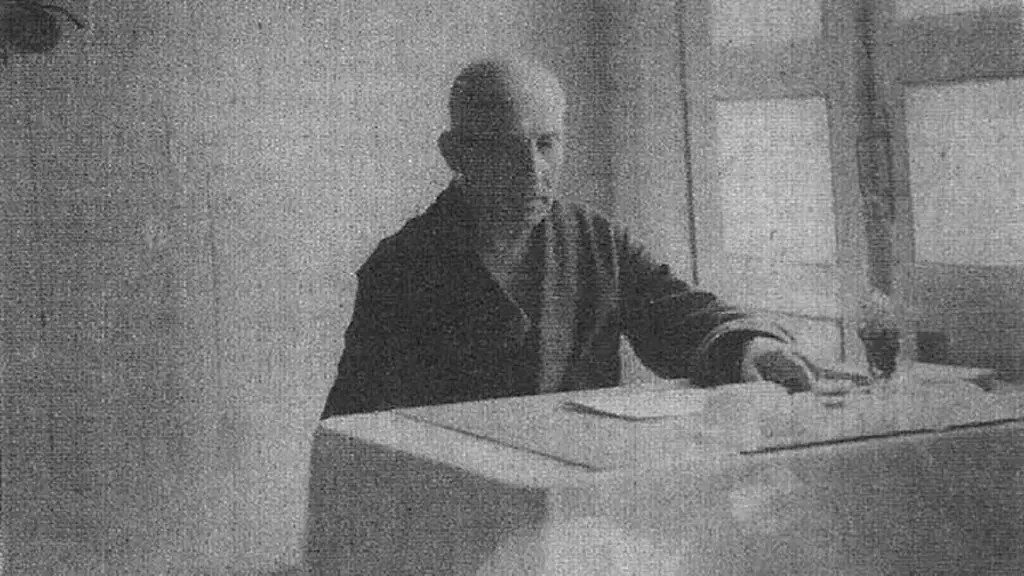
The Soviet composer Alexander Veprik (1899–1958) was born in Balta in what is now Ukraine. He is considered to be one of the most important composers of what is known as the Jewish school in Soviet music. He helped to create the Society for Jewish Music in Moscow in the early 1920s, which helped Jewish composers and musicians to flourish in the period between the world wars.
In the late 1920s he took a trip throughout Europe and this led to his music becoming well known both in Europe and in the United States of America. Interestingly, at that time his music was most often played in Germany; he was seen there as a Russian rather than Jewish composer. His music was praised for its expressionistic style, use of trills and repeated notes, tritones, and unusually phrased motifs. His star did not shine for long, however.
Jascha Nemtsov said, “Weprik [sic] was arrested in 1950, maltreated in prison and then deported to the Gulag. He was released from hard labor and instead had to organize an amateur orchestra among the prisoners. This is almost symbolic for the short history of Jewish music in Russia: the career of a composer, that had started on stages in Moscow, Berlin and Vienna, ended in the Gulag with arrangements for a balalaika orchestra.”
Jan Waas said, “When censorship of Jewish culture increased in the 1930s, Veprik had to adapt to Soviet rules and refrain from writing Jewish music. Instead, he and his colleagues had to write music from other Soviet nations. In 1938–1950 Veprik mainly focused on Kyrgyz music. Still, the obligatory bow to the rules of the party did not prevent Veprik’s dismissal during a purge at the Moscow Conservatory in 1943, and in 1950 he was arrested and sentenced to eight years at a prison camp in the Urals on charges of composing Zionist music and maintaining foreign contacts. He was released and rehabilitated in 1954 as a broken man.”
Kaddish (1925) dates from Veprik’s earlier period, when he could still compose Jewish music and it could be performed in Russia. This piece was originally written for voice and piano, although versions for violin, viola, flute, or oboe in place of the voice also exist. This beautiful work, a Jewish hymn of praise, is a great introduction to the work of a composer whose voice was silenced by a repressive regime.
My classical music post for today is Alexander Veprik’s Kaddish.


Leave a Reply