

William Cosgrove famously said, “Music hath charms to soothe a savage breast.” At this pivotal moment in the world’s history, the Daily Classical Music Post explores music by composers who ran afoul of tyrants and dictators and who as a result were banned, imprisoned, or executed. We’ll also listen to some music by composers who criticized the regime under which they worked but managed to fool the ruler.
Ullmann: Der Kaiser von Atlantis – Hallo, hallo! Achtung! Achtung!
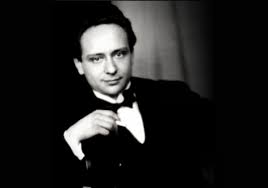
The Austrian composer Viktor Ullmann (1898–1944) was the son of assimilated Jews who had converted to Catholicism. He grew up mainly in Vienna but moved to Prague in 1919 to pursue a career in music. His teachers included Arnold Schoenberg and Alexander von Zemlinsky. Ullmann’s music is characterised by dissonant harmonies, a highly organised formal structure, and extreme emotions.
When the Nazis invaded Prague, Ullmann, who was definitely a leading composer at the time, was arrested. His music was banned and most of his manuscripts were destroyed. He was sent to Theresienstadt concentration camp. The Nazis pretended that this camp was a place where the prisoners were treated well; many were musicians, and they were allowed to continue to play and perform for each other and their captors. Ullmann composed a lot of music while he was there, including choral works, piano sonatas, a string quartet, and stage works, including the chamber opera Der Kaiser von Atlantis oder Die Tod-Verweigerung (The Emperor of Atlantis or The Disobedience of Death), which probably led to his deportation to Auschwitz, where he was killed. Fortunately, the music he composed in Theresienstadt was saved by a fellow prisoner, but there is a legal dispute over who has the rights to the scores, so much of his work is still unknown.
Kate Connolly said, “Ullmann . . . wrote the operatic satire on Adolf Hitler knowing full well that it would lead to his death. The nature of its contents was not lost on the SS authorities of Theresienstadt, who soon after the final rehearsal of the work, in March 1944, deported Ullmann to Auschwitz, along with his librettist, Peter Kien. . . . The one-hour opera is an energetic mix of jazzy interludes, touches of cabaret, Bach-style chorales and sweet lyricism. It serves . . . as a bittersweet tribute to the long lineup of musicians whose murder or expulsion from Europe ‘destroyed much of the continent’s musical legacy’.”
John Axelrod, who conducted a revival of Der Kaiser von Atlantis in 2013 at the former headquarters of the SS and Gestapo in Berlin, said that Ullman used “the opera to ask, what happened to German enlightenment and its key ideal, all people become brothers?” Andrew Porter summarised the opera: “The plot is . . . about a mad, murderous ruler, possibly redeemed at last, who says farewell to the world in a mock-Faustian vision of a natural paradise no longer spoiled by men; had his dream come true all men would be dead. The Emperor of Atlantis, ruler over much of the world, proclaims universal war and declares that his old ally Death will lead the campaign. Death, offended by the Emperor’s presumption, breaks his sabre; henceforth men will not die. Confusion results: a Soldier and a Girl-Soldier from opposite sides sing a love duet instead of fighting; the sick and suffering find no release. Death offers to return to men on one condition—that the Emperor be the first to die. He accepts and sings his farewell.”
My classical music post for today is Viktor Ullmann’s Der Kaiser von Atlantis oder Die Tod-Verweigerung: “Hallo, hallo! Achtung! Achtung!”


Leave a Reply