

William Cosgrove famously said, “Music hath charms to soothe a savage breast.” At this pivotal moment in the world’s history, the Daily Classical Music Post explores music by composers who ran afoul of tyrants and dictators and who as a result were banned, imprisoned, or executed. We’ll also listen to some music by composers who criticized the regime under which they worked but managed to fool the ruler.
Psaume 128: Bienheureux est quiconque
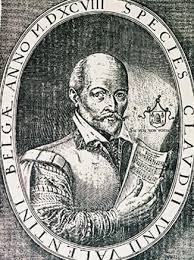
Although there are some scholars who dispute whether or not the High Renaissance French composer Claude Goudimel (sometimes spelled Godimel; c. 1520–1572) was murdered during the St Bartholomew’s Day Massacre (the targeted assassinations by French Catholics against the Huguenots, who were Calvinist Protestant, during the French Wars of Religion), most agree that is it likely that he was. Goudimel had converted from Catholicism some years before, and he was well known for his music composed for the Calvinist church. There is some evidence that he was assassinated in his home, in bed, and his body was subsequently thrown into the Rhône.
By that time, however, Goudimel had composed in just about every genre of the time, including masses, odes, motets, psalms, and chansons. He published almost all of his works between 1551 and 1558. One of his most important contributions was his first book of settings of all of the psalms in the Genevan Psalter; the website of the Musée protestant said, “He was indeed the only composer to have harmonized the entire Psalter, that is to say, the 150 psalms written in verse by Clément Marot and Théodore de Bèze.” It helped that, as Sara A. Ferguson said, “[t]he most impressive musical monument that Goudimel could achieve was to set the translated Psalms into the French vernacular.” Goudimel’s simple harmonizations of the psalms made it easier for people to hear and understand the words, an important innovation at the time. Calvin had encouraged psalm-singing at home, and Goudimel’s settings were perfect for that. Goudimel was also one of the first composers to put the psalm melody in the top voice, which he did in almost all of the psalms in his 1564 collection.
Although many of Goudimel’s works are in a homophonic style, with some syncopations and staggered entries allowing inner parts to be heard more easily, his settings of some of the psalms tend to be more contrapuntal and polyphonic. The website hymnary.org said, “[Goudimel] actually composed three complete harmonizations of the Genevan Psalter, usually with the tune in the tenor part: simple hymn-style settings (1564), slightly more complicated harmonizations (1565), and quite elaborate, motet-like settings (1565–1566). . . . GENEVAN 128 was first published in the 1543 edition of the Genevan Psalter. Claude Goudimel harmonized the tune in 1564; originally the melody was in the tenor. In the Dorian mode, this tune consists of four long lines in two pairs, consisting of slightly different rhythmic patterns. A striking melody with larger intervals at the beginnings of lines 1 and 2, GENEVAN 128 is worth the effort it may require to learn.”
My classical music post for today is Claude Goudimel’s setting of Psalm 128.


Leave a Reply