

William Cosgrove famously said, “Music hath charms to soothe a savage breast.” At this pivotal moment in the world’s history, the Daily Classical Music Post explores music by composers who ran afoul of tyrants and dictators and who as a result were banned, imprisoned, or executed. We’ll also listen to some music by composers who criticized the regime under which they worked but managed to fool the ruler.
Zhou Xuan and Li Mingjian – Your Flowers 1934/8/8 你的花儿~周璇~黎明健
The Chinese Communist leader Mao Zedong said that all music “belong[s] to definite classes and [is] geared to definite political lines. There is, in fact, no such thing as art for art’s sake.” This statement, and the attitude accompanying it, led to a period in China called the Cultural Revolution during which, as Andy Fein said, “Western music in this time was outlawed, music schools closed, and instruments destroyed. During this time professors and students of classical music were often sent to the countryside or killed. . . . This persecution was justified by the reasoning that Western music stood for capitalist values and was a tool of the upper class.”
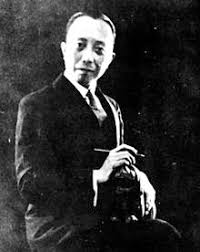
The Chinese composer Li Jinhui (1891–1967) was one of the casualties of this persecution. Li was an innovator; he combined Chinese traditional and folk music with Western music, in particular jazz, to create a new musical form in the 1930s, called shidaiqu. This brought him into conflict with Mao and the Nationalist government. His music was labelled “yellow music,” which basically categorized it as pornography (because he included words like “kiss” and “love” in the texts), and banned not only his songs but also the extremely popular children’s operas that he had composed. Li also published textbooks to use in primary school music education classes, and these, too, were banned.
Alessia De Donna said, “Li Jinhui was nicknamed the ‘father of Chinese folk music’ . . . Li Jinhui died a victim of political persecution during the Cultural Revolution and was labeled a ‘corrupter of public morals’. . . . It was only in the late 1970s, with China’s gradual reintegration into transnational financial and cultural circuits, that historians began to recognize that Li was not simply a popular musician and that his contribution went far beyond that.”
Huang Yi, Loo Fung Chiat, Yeoh Pei Sze and Indra Selvarajah said, “During the Cultural Revolution in 1966, Li Jinhui was not spared; his home was raided and ransacked several times. . . . [I]t was only in November 2001 that a research conference was held in Beijing to commemorate the 110th Anniversary of Li Jinhui’s birth. Representatives from the cultural and music circles at home and abroad reviewed the history, the historical background, and reasons for the unfair treatment of Li Jinhui, as well as the treatment and criticism he faced in those years.” It is extremely difficult, if not impossible, to find recordings of Li’s children’s operas. There are a few recordings of his art or popular songs in existence, including today’s selection, “Your Flowers,” sung by two women, one of whom (Li Mingjian) was his foster daughter.
My classical music post for today is Li Jinhui’s “Your Flowers.”


Leave a Reply