

The first work of a classical composer can provide a glimpse of who that composer will become, or it can seem as if it was written by a totally different musician. This November, the Daily Classical Music Post will explore some first works (or Op. 1 works, not always the very first work) by composers familiar and unfamiliar.
Cage, John (1932-1933): Three songs for voice and piano — Windsor/Simonacci
The American avant-garde and experimental composer John Cage (1912–1992) is known, of course, for his 4′33″, prepared piano works, and other “out there” pieces. His early works, however, are very much more mainstream.
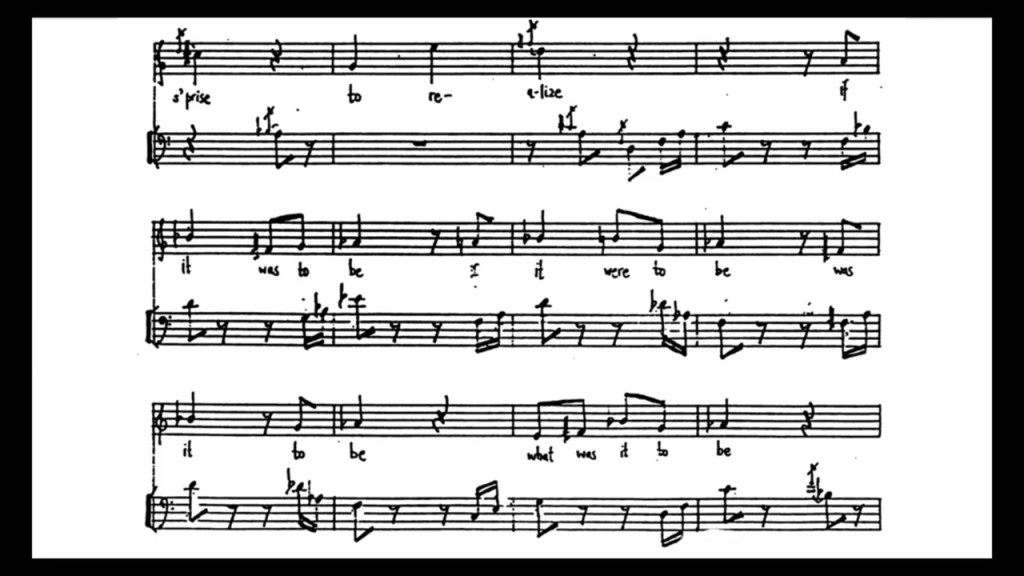
One of his earliest known works, Three Songs for voice and piano—composed between 1932 and 1933—is a great example of this. The three songs are all set to texts by Gertrude Stein. The titles of the songs are “Twenty years after,” “If it was meant to be,” and “At East and ingredients.” Herbert Henck said, “John Cage’s name is so closely identified with experimental, dissonant and radical music making, with the idea that anything—including ‘silence’ itself—can be music, that we tend to forget how uniquely, lyrical and even beautiful his early compositions are.”
These short songs are challenging to sing and play, although they look quite simple on the manuscript page. They also bear out the conversation that Cage had with his teacher, Arnold Schoenberg, which he related in a talk in 1958: “After I had been studying with him for two years, Schoenberg said, ‘In order to write music, you must have a feeling for harmony.’ I explained to him that I had no feeling for harmony. He then said that I would always encounter an obstacle, that it would be as though I came to a wall through which I could not pass. I said, ‘In that case I will devote my life to beating my head against that wall’.” And although the songs are quite lyrical, they definitely would not be described as harmonic. But they are a fascinating glimpse into the work of a composer who would never cease experimenting and changing.
My classical music post for today is John Cage’s Three Songs.


Leave a Reply