

The first work of a classical composer can provide a glimpse of who that composer will become, or it can seem as if it was written by a totally different musician. This November, the Daily Classical Music Post will explore some first works (or Op. 1 works, not always the very first work) by composers familiar and unfamiliar.
4 Songs, Op. 1: No. 4, Ariette
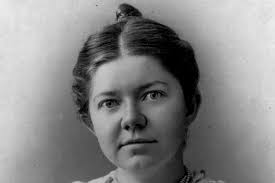
The pioneering American composer Amy Beach (1867–1944) was acclaimed as a pianist as well; in fact, she considered herself to be “a pianist first and foremost.” As a composer, Beach was almost entirely self-taught, although she was an accomplished pianist and singer and had received training in both from a very young age. Her much older doctor husband built her a studio to encourage her composition output while limiting her piano performances to but two a year. And Beach became the most well-known and successful woman composer of art songs and large-scale orchestral works in her lifetime.
Emma Riggle said, “Poetry was a major theme in the music of American composer Amy Marcy Cheney Beach (1867–1944). Her 117 art songs explore a huge range of poets, from Robert Browning to Robert Burns. Amy Beach’s love of poetry also appears in a large catalogue of choral compositions, with settings of poets like Oliver Wendell Holmes, in The Chambered Nautilus, Op. 66, and Francis of Assisi, in The Canticle of the Sun, Op. 123. ”
Beach’s love of poetry was evident from her earliest compositions, including her Op. 1, Four Songs for voice and piano, composed between 1885 and 1887. The four songs are “With violets,” set to a poem by Kate Vannah; “Die vier Brüder,” set to a poem by Friedrich Schiller; “Jeune fille et jeune fleur,” set to a poem by François-René de Chateaubriand; and “Ariette,” set to a poem by Percy Bysshe Shelley.
Katherine Kelton said of Beach’s songs, “They demonstrate her intimacy with the texts she chose to set, mastery of the form, and awareness of trends in current European musical styles. Insightful interpretation of poetic material and a keen awareness of languages’ natural inflections led to creation of melodies that flow as easily as the spoken word. This characteristic sets her songs apart from those of her peers and makes her songs accessible to both amateur and professional musicians.”
My classical music post for today is Amy Beach’s Four Songs, Op. 1 No. 4: Ariette.


Leave a Reply