

The first work of a classical composer can provide a glimpse of who that composer will become, or it can seem as if it was written by a totally different musician. This November, the Daily Classical Music Post will explore some first works (or Op. 1 works, not always the very first work) by composers familiar and unfamiliar.
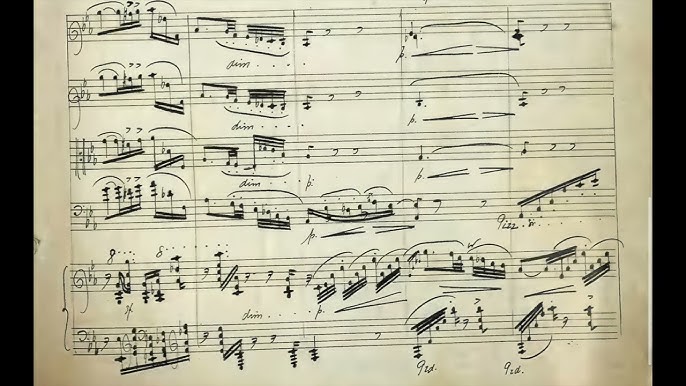
Coleridge-Taylor: Piano Quintet in G Minor, Op. 1: I. Allegro con moto
The British–Sierra Leonean composer Samuel Coleridge-Taylor (1875–1912) was named for the poet Samuel Taylor Coleridge. Originally, his name was not hyphenated, but apparently a printer inserted one by accident so the composer decided to keep it. In his early 20s, he was mentored by Edward Elgar, who referred to Coleridge-Taylor as “far and away the cleverest fellow going amongst the younger men.” Coleridge-Taylor’s music was a great success both in Europe and in the United States. President Theodore Roosevelt welcomed him to the White House in 1904, and performances of his works met with great success in his lifetime.
An article on sctf.co.uk about Coleridge-Taylor’s Op. 1 said, “Coleridge-Taylor’s early works were for chamber ensembles—probably the only performance forces available to him at the time. These works lay almost completely unacknowledged for the best part of a century. The Opus 1, or first formal work, Piano Quintet (after much research finally unearthed it in the archive of the Royal College of Music by Hilary Burrage), was resurrected from total obscurity by Martin Anthony. . . . The first ever public performance of the Piano Quintet Op. 1 was on 9 October 1893 in Croydon Public Hall, when the young composer himself played the piano part. (Other performers included a string quartet actually led by a woman, Jessie Grimace.) The concert came about as a result of Coleridge-Taylor’s newly acquired status as a Royal College of Music composition scholar.”
Lionel Harrison said of the Piano Quintet, “Conscious that it contained some first-rate material which might languish in oblivion, Coleridge-Taylor reused two of its themes: the second subject of the first movement forms an episode of the African Dance Op 58 No 3, for violin and piano (1904); and the trio of the Scherzo reappears in the ‘Valse de la Reine’, the third in the sequence of Characteristic Waltzes Op 22 for orchestra (1898). . . . The first movement has an assertive principal subject played by all the strings in octaves with an almost orchestral sonority; the second subject, in the relative major key of B flat, is introduced by the piano and while its shape and apparent simplicity might be Schubertian (as is its momentary diversion to C flat major), it represents an early flowering of Coleridge-Taylor’s own exceptional melodic talent.”
My classical music post for today is Samuel Coleridge-Taylor’s Piano Quintet, Op. 1: I. Allegro con moto.


Leave a Reply