

This July, the DCMP will share some previous posts that you might have missed or would just like to hear again! A new theme begins in August.
Published November 20, 2013
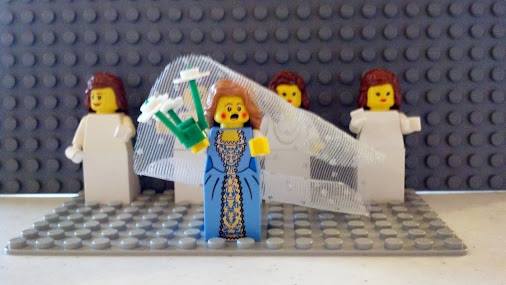
[Note: this was originally posted in a month when I created little LEGO vignettes to illustrate each opera.]
Joan Sutherland “Casta diva” from “Norma”
Vincenzo Bellini composed his bel canto opera Norma in 1831. This two-act tragedia lirica is seen as one of the greatest in this Italian form of opera, the “beautiful singing” style. Although composers had been writing in the bel canto style in the 18th century, the term really came into use in the 19th century as a reaction to the development of the speech-based singing style of German, and most particularly Wagnerian, opera. The recognized masters of bel canto opera were Donizetti, Rossini, and Bellini.
Norma is set in 1st-century Gaul. Norma, a Druid seer, has had two children with her lover, the Roman proconsul Pollione. Unbeknownst to her, Pollione has fallen in love with the much younger Druid Adalgisa and has decided to run away with her. Adalgisa tells Norma, by accident (well, this is opera, so probably not really by accident), and Norma vows revenge. In the great tradition of Medea and those other marvelous examples of motherhood, Norma decides to kill her children to get back at Pollione. Fortunately, she stops at the last moment because she loves them too much, and she asks Adalgisa to take care of them. When Pollione comes to the Druids’ temple to pick up Adalgisa, Norma denounces him. The Druids seize him, and both he and Norma die on a pyre.
Interestingly, the role of Norma is considered to be one of the most difficult in the operatic repertoire. The Wagnerian soprano Lilli Lehmann apparently once said that singing all three Brünnhildes in The Ring in one evening would be less stressful than singing Norma, although she later qualified this: “When you sing Wagner, you are so carried away by the dramatic emotion, the action, and the scene that you do not have to think how to sing the words. That comes of itself. But in Bellini, you must always have a care for beauty of tone and correct emission.”
One of the most famous and loved arias of the 19th century was “Casta diva,” the aria that Norma sings to the moon goddess, asking for peace and strength in the upcoming revolt against the Roman invaders. Many sopranos were noted for their performance of this aria, and it is still loved to this day.
My classical music post for today is Vincenzo Bellini’s “Casta diva.”


Leave a Reply