

This July, the DCMP will share some previous posts that you might have missed or would just like to hear again! A new theme begins in August.
Published January 15, 2016
Horatio Parker: A Northern Ballad
As Douglas Shadle says in his recent book Orchestrating the Nation, most present-day concertgoers may never hear any of the 100+ symphonies composed by American composers in the 19th century. To most classical music fans, the 19th century is all about the Russians, the Germans, perhaps some other Europeans, but American music of that time is considered to be popular (e.g., Foster). The first American composer most people will have heard is Ives.
This January, the Daily Classical Music Post aims to correct this. As the music of so many 19th-century American composers is either lost or not performed, it has not been all that easy to find large-scale works. During this month, you will perhaps discover some music that will pique your interest, and perhaps more ensembles will look into performing something other than the usual European standards!
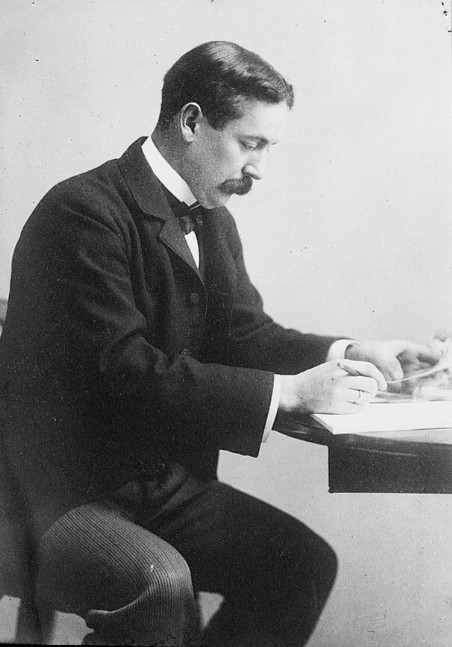
Horatio Parker (1863–1919) is probably best known as Charles Ives’s teacher at Yale. He was highly respected as an organist and composer in his lifetime. As with many of the other composers I’ve discussed this month, he studied in Germany, in his case with Josef Rheinberger. He composed several oratorios, cantatas, orchestral works, chamber works, organ and piano pieces, and even a couple of operas (Mona, composed in 1911, won a $10,000 prize in a Metropolitan Opera competition, and Fairyland, composed in 1915, won $10,000 in a competition held in Los Angeles).
Parker composed the symphonic tone poem A Northern Ballad in 1898, and it is considered by many to be his most important orchestral work. William Kearns says, “A Northern Ballad was written at a time of continuing controversy over the importance and manner of nationalism in music, a legacy of Dvorak’s statements made during his term as Director of the National Conservatory of Music in New York. Both its title and content suggest another step in Parker’s move away from German influences . . .” As you listen to this simple, lovely work, you can get a sense of the conservatism in Parker’s writing, which was a source of great frustration to Ives. However, you will also agree with Ives, I am sure, that Parker was “a real composer.”
My classical music post for today is Horatio Parker’s A Northern Ballad.


Leave a Reply